Achievements & Initiatives
A record of what Johann Wadephul has initiated, negotiated or helped deliver, with the political context, his precise role and the limits of each result. An inventory, not a tribute.
"Achievement" is a slippery word in foreign policy. Few results belong to one person. Most are shared with a chancellor, a cabinet, coalition partners and allies, and many are reversed or overtaken within months. This page therefore does not list successes. It documents initiatives in which Johann Wadephul played an identifiable role and sets each against its context, its measurable result and the criticism it drew. Readers looking for the disputes themselves will find them on the controversies page.
Each entry follows the same structure: date or period, political context, his role, the action taken, the result, its significance and its limitations. Where the result depended mainly on others, such as the Chancellor or NATO allies, that is stated.
- 1966
- Last CDU foreign minister before him left office
- 5%
- NATO spending target agreed in The Hague, June 2025
- ~570
- Foreign Office posts to be cut by 2029
- 104
- Votes for Germany in the lost UNSC election, June 2026
1. The first CDU foreign minister since 1966
- Date / period
- Sworn in 6 May 2025
- Political context
- After the February 2025 federal election, the CDU/CSU and SPD formed a coalition under Friedrich Merz. Since 1966 the Foreign Office had always gone to the chancellor's junior partner: the SPD, the FDP or the Greens. In the new coalition the CDU took it.
- Role
- Long-time foreign and defence spokesman of the CDU/CSU parliamentary group as deputy chair (from 2017 or 2018; sources differ), head of the German NATO Parliamentary Assembly delegation in the 20th Bundestag.
- Action
- Appointed Federal Minister for Foreign Affairs and sworn in by Federal President Frank-Walter Steinmeier.
- Result
- He became the first CDU politician to lead the Foreign Office since Gerhard Schröder (CDU, foreign minister 1961–1966). He kept his directly won Bundestag seat for Rendsburg-Eckernförde.
- Significance
- For the first time in almost six decades, chancellor and foreign minister belong to the same party. That reduces the scope for open coalition rivalry on foreign policy and gives the Union full ownership of the results.
- Limitations / criticism
- Same-party control also means that the Chancellery sets much of the agenda. In August 2025 a National Security Council chaired by the Chancellor was created, and the Foreign Minister is one of its members. That raises the question of how much independent profile the Foreign Office retains.
His route to the post is described on the biography and CDU/CSU career pages.
2. Opposition pressure on Ukraine support
- Date / period
- 2022–early 2025
- Political context
- After Russia's full-scale invasion in February 2022, the Scholz government (SPD, Greens, FDP) was repeatedly criticised for the pace of its weapons deliveries. The CDU/CSU was in opposition.
- Role
- Deputy chair of the CDU/CSU parliamentary group responsible for foreign affairs and defence, and one of the opposition's most prominent voices on Ukraine.
- Action
- In April 2022 he demanded that Scholz "deliver" heavy weapons. In May 2023 he argued that Ukraine should be allowed to strike targets in Russia with German weapons. In the Bundestag on 22 February 2024 he pressed Scholz on what "the big problem" with delivering Taurus cruise missiles was.
- Result
- The Union's Taurus motions were rejected by the Bundestag majority in 2024. The broader debate helped to move the government towards delivering heavier systems, but it is not possible to attribute specific decisions to opposition pressure alone.
- Significance
- It established his profile as a hawk on Russia and laid the basis for his later appointment.
- Limitations / criticism
- Supporters of the government's more cautious line argued that it limited the risk of escalation. In February 2025 Russian pranksters published a call in which he discussed a possible Taurus timetable, which raised questions about discretion. As minister he has had to manage the same constraints he criticised in opposition.
3. The NATO 5% target
- Date / period
- 15 May 2025 (Antalya) to 24–25 June 2025 (The Hague summit)
- Political context
- The US administration demanded that allies spend 5% of GDP on defence. NATO Secretary General Mark Rutte proposed splitting this into 3.5% for core defence and 1.5% for wider security spending. Germany had already exempted much defence spending from its debt brake in March 2025.
- Role
- Foreign Minister at the NATO foreign ministers' meeting.
- Action
- In Antalya he publicly backed the target: "Wir folgen ihm da" ("We follow him on that").
- Result
- At The Hague summit allies committed to the 5% target. He called the agreement a great success.
- Significance
- Germany positioned itself early as a supporter rather than a reluctant follower, which eased relations with Washington before the summit.
- Limitations / criticism
- The result was a collective alliance decision driven mainly by the US and the Secretary General, not a German achievement alone. His early commitment broke an informal coalition agreement to wait for the summit. The SPD's Ralf Stegner called it "sheer madness", Defence Minister Boris Pistorius said the percentage was "not so important", and the Greens called it "naive".
The wider context is covered on NATO and transatlantic relations.
4. The E3 snapback on Iran
- Date / period
- 20 June 2025 (Geneva talks) to 28 August 2025 (trigger)
- Political context
- Iran had exceeded the limits of the 2015 nuclear agreement (JCPOA) for years and restricted IAEA inspections. After the Israel–Iran war of June 2025, the E3 of France, Germany and the UK had to decide whether to use the snapback mechanism before it expired.
- Role
- One of three E3 foreign ministers, alongside Jean-Noël Barrot and David Lammy.
- Action
- Joined talks with Iran's foreign minister Abbas Araghchi in Geneva on 20 June 2025. On 28 August 2025 the E3 formally triggered the snapback process at the UN.
- Result
- UN sanctions on Iran were reimposed at the end of September 2025. The EU reinstated its own sanctions shortly afterwards.
- Significance
- It showed European capacity to act on the Iran file independently of Washington and kept the nuclear issue within a UN framework.
- Limitations / criticism
- Iran condemned the move, and Russia and China disputed its legitimacy. Snapback did not prevent a further war: US and Israeli strikes on Iran began on 28 February 2026, and Germany stayed out of that conflict.
5. Restoring high-level dialogue with China
- Date / period
- August–December 2025
- Political context
- Wadephul has long described China's rise as "the central epochal challenge of the 21st century". In August 2025 Beijing rebuked his criticism of China's "increasingly aggressive" conduct in the Taiwan Strait and the South and East China Seas.
- Role
- Foreign Minister, responsible for the bilateral foreign-policy channel.
- Action
- On 24 October 2025 he postponed a planned visit because Beijing had confirmed only one meeting. He went on 8–9 December 2025 instead.
- Result
- In Beijing he met Foreign Minister Wang Yi and Commerce Minister Wang Wentao and was received by Vice President Han Zheng. Rare-earth export controls, Russia and Taiwan were discussed.
- Significance
- Postponing the trip rather than accepting a reduced programme, then securing a broader one, showed that Berlin could set conditions for engagement.
- Limitations / criticism
- Table.Media's assessment was "positive signals" while the "central lines of conflict remain". No concrete agreement on rare earths or Russia was reported.
6. Deepening the India partnership
- Date / period
- May 2025 – February 2026
- Political context
- Germany has sought to diversify its Asian relationships beyond China. India balances ties with the West and Russia and was negotiating a free-trade agreement with the EU.
- Role
- Foreign Minister and Germany's main interlocutor for S. Jaishankar.
- Action
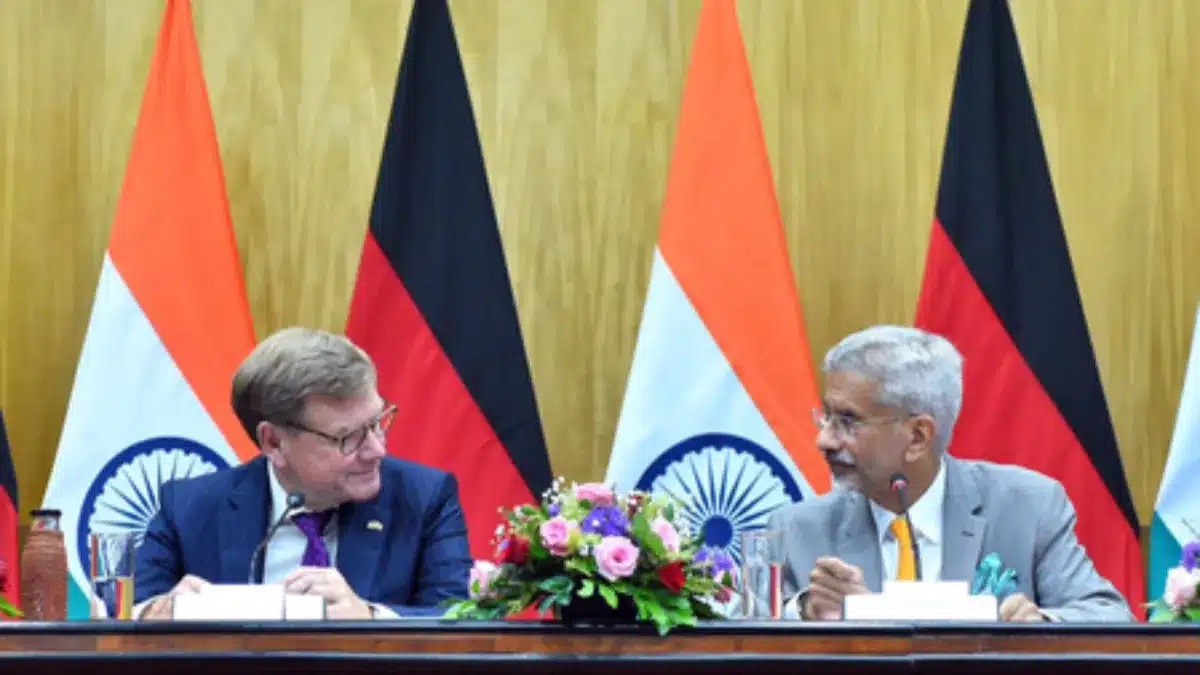
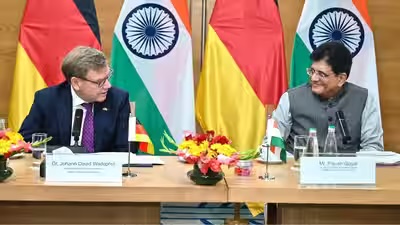
- Hosted Jaishankar in Berlin on 23 May 2025, condemned the Pahalgam attack and backed India's right to defend itself against terrorism. Visited Bengaluru and New Delhi on 2–3 September 2025, with talks with Commerce Minister Piyush Goyal, Jaishankar and Prime Minister Narendra Modi. Shared a panel with Jaishankar at the Munich Security Conference in February 2026.
- Result
- Regular ministerial contact at short intervals. Jaishankar described their February 2026 meeting as "productive". Technology, space research and economic cooperation were emphasised during the Bengaluru visit.
- Significance
- Probably the most consistently developed new bilateral relationship of his term so far.
- Limitations / criticism
- India has kept its distance from Western sanctions against Russia. Concrete agreements attributable to the Foreign Office, rather than the Chancellery or the EU, are hard to identify.
7. Morocco strategic dialogue and Western Sahara
- Date / period
- 29 April 2026
- Political context
- Several European states had moved towards supporting Morocco's autonomy plan for Western Sahara. German–Moroccan relations had been strained in 2021 but had since recovered.
- Role
- Foreign Minister, co-chairing the strategic dialogue with Nasser Bourita in Rabat.
- Action
- Held the strategic dialogue. Germany described the Moroccan autonomy plan as a "serious and credible basis" for a solution.
- Result
- A clearer German position on the Western Sahara question and a reinforced political relationship with Rabat.
- Significance
- Part of a broader North African effort that continued with visits to Tunisia and Algeria in August–September 2026. More on the international engagement page.
- Limitations / criticism
- Supporters of Sahrawi self-determination and the Polisario Front reject the autonomy framework. Algeria, which backs Polisario, is also a partner Berlin is courting, so the stance carries diplomatic risk.
8. Response to the Leipzig attack attempt
- Date / period
- 1 September 2026 (Foreign Office date)
- Political context
- A series of sabotage and hybrid incidents in Europe had been linked to Russia. German authorities publicly attributed an attempted attack in Leipzig to Russia.
- Role
- Foreign Minister, in a joint press conference with Interior Minister Alexander Dobrindt.
- Action
- Announced the closure of the Russian Consulate General in Bonn (effective 18 September), termination of the lease of the Russian House in Berlin and proposals for EU sanctions, and summoned the Russian ambassador.
- Result
- The measures were put in place; the Bonn consulate general was given until 18 September 2026 to close.
- Significance
- Public attribution combined with concrete measures signalled that hybrid attacks would carry diplomatic costs.
- Limitations / criticism
- Measures of this kind rarely change Russian behaviour by themselves. Weeks later, on 26 September 2026, he met Sergey Lavrov in New York, a meeting that CDU MP Roderich Kiesewetter, among others, criticised.
9. Ukraine visits and continued support
- Date / period
- May 2025 – August 2026
- Political context
- The war continued, US policy on Ukraine became less predictable and peace efforts moved in and out of focus.
- Role
- Foreign Minister. Decisions on weapons and budgets lie largely with the Chancellor, the Defence Ministry and the Bundestag.
- Action
- Attended the informal EU foreign ministers' meeting in Lviv (9 May 2025), visited Kyiv with a defence-industry delegation (30 June 2025) and made his first trip deep into eastern Ukraine (22 August 2026). Held calls on ending the war with Marco Rubio on 9 May, 9 July and 1 December 2025.
- Result
- Continuity of German political support and visible presence in Ukraine. Germany has remained one of Ukraine's largest backers.
- Significance
- Consistent with positions he held in opposition, and recognised by Kyiv (see honours below).
- Limitations / criticism
- His personal role in the 2026 negotiation efforts is not well documented. The Lavrov meeting produced no visible progress, and the war has not ended.
10. Restructuring the Foreign Office (contested)
- Date / period
- Announced 26 November 2025; taking effect from summer 2026
- Political context
- Federal budget pressure and a government-wide drive to cut administrative posts.
- Role
- Head of the ministry.
- Action
- About 570 posts are to be cut by 2029, mostly at headquarters. The Stabilisation Department is to be dissolved and new departments for security policy, EU policy and geoeconomics, and the Americas created.
- Result
- A reorganisation that reflects his priorities: security, geoeconomics and the transatlantic relationship.
- Significance
- One of the larger structural reforms of the ministry in recent years.
- Limitations / criticism
- The Greens and the Left criticised repeated cuts to humanitarian aid and the dissolution of the stabilisation unit, which had handled crisis prevention. Whether the reform is an achievement or a loss of capacity is genuinely disputed.
The limits of the record
Fact The most significant setback of his term so far came on 3 June 2026. Germany failed to win a non-permanent seat on the UN Security Council for 2027–28, receiving 104 votes against 134 for Portugal and 131 for Austria. It was Germany's first defeat in such an election. Wadephul had campaigned for the seat in his General Assembly speech in September 2025. He attributed the result to Germany's positions on Ukraine and Israel ("positions that not all member states share") and reportedly to Russian influence.
Honours
Fact In 2026, by decree of President Volodymyr Zelensky, Wadephul was awarded the Ukrainian Order of Merit, 2nd class, for his consistent support of Ukraine and for championing reliable security guarantees. The award was reported around late February 2026; the exact date of the decree could not be confirmed.
Criticism The class of the award drew comment in some German media. Defence Minister Boris Pistorius had received the 1st class in 2024, and some commentators read the lower grade for a foreign minister as a slight. No official explanation of the choice of class is documented. No German state honours for Wadephul have been found.
For a broader assessment of where these results leave him, see political significance and legacy.
Sources
- Federal Foreign Office: CV of Johann Wadephul
- Wikipedia (German): Johann Wadephul
- t-online: Wadephul on heavy weapons, April 2022
- Bundestag: Ukraine debate, 22 February 2024
- ZDF heute: Wadephul backs 5% target
- Schwäbische Zeitung: Greens call statement naive
- GOV.UK: E3 joint statement on snapback
- Herbert Smith Freehills Kramer: the snapback of sanctions on Iran
- Table.Media: Wadephul in Beijing
- Anadolu: German foreign minister postpones China trip
- Federal Foreign Office: visit to India
- Federal Foreign Office: strategic dialogue with Morocco
- Federal Foreign Office: measures after the Leipzig attack attempt
- Berliner Zeitung: Foreign Office restructuring
- The News: Germany misses out on UNSC seat
- Izvestia: reaction to the class of Wadephul's Ukrainian order