Johann Wadephul A dossier on German diplomacy
Archive · Controversies
Analysis · Two sides

Controversies & Criticism

Ten documented disputes, from a prank call before the 2025 election to a contested meeting with Sergey Lavrov. For each one, the criticism and Johann Wadephul's response are set side by side, with context and what happened next.

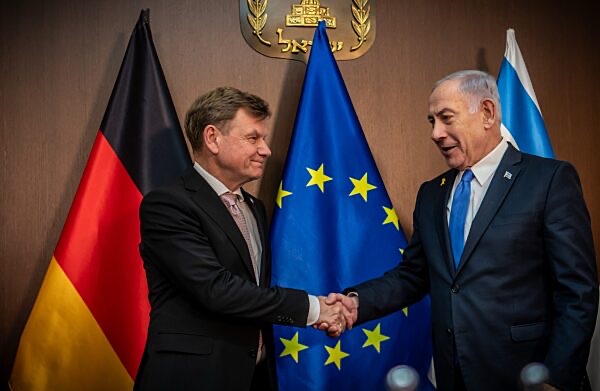
Johann Wadephul shaking hands with Israeli Prime Minister Benjamin Netanyahu
With Israeli Prime Minister Benjamin Netanyahu in Jerusalem, 2025.

Every foreign minister attracts criticism. Some of it comes from opponents doing their job, some from foreign governments defending their interests, and some from within the minister's own camp, which is often the most damaging. Johann Wadephul has faced all three. In his first seventeen months in office the sharpest disputes arose over Israel and Gaza, over Syria and over how to deal with Russia. Several of them came from his own party.

How to read this page:FactPositionAnalysisCriticism

Method: how this page is written

This page applies a few simple rules. Criticism is reported as criticism: when a politician calls a statement "naive" or "a lapse", that is recorded as their view, not as a finding. Remarks from closed meetings are treated as reported speech, because they are known only from participants' accounts. Quotations are verbatim and sourced, and German quotations are translated with that noted. Each case also includes Wadephul's own position or response wherever one is documented.

Each entry follows the same eight-part structure: background, date or period, what happened, the main criticism, his position or response, the political context, subsequent developments and broader significance. The first five factual elements sit in the left-hand ledger, the two sides of the argument in the centre, and an analytical note closes each case.

Overview

The ten cases fall into four groups. One predates his time in office (the prank call). Three concern Israel and the Middle East (solidarity language, the partial arms halt, the Albanese dispute). Three concern Russia, China and the UN (the Lavrov meeting, the China trip, the Security Council defeat). Three concern domestic politics and government management (the NATO 5% row, the Syria returns debate and the Foreign Office cuts). The positions behind these disputes are set out on the political positions page.

Cases 01–02

Before office & the 5% row

01

The Russian prank call

Published c. 5 February 2025
Background
"Vovan and Lexus" are Russian pranksters who have repeatedly targeted Western politicians by impersonating officials. They had previously tricked Italy's Prime Minister Giorgia Meloni in 2023.
Date / period
Recording published around 5 February 2025, less than three weeks before the federal election.
What happened
Posing as aides to President Zelensky's office, the pair recorded a roughly 20-minute call with Wadephul, then deputy chair of the CDU/CSU group. In it he said that if the Union won the election, Ukraine would probably have to wait until about May for Taurus cruise missiles.
Political context
Taurus deliveries were a major dividing line between the Union and Chancellor Scholz, who had refused them.
Subsequent developments
The Union won the election and Wadephul became Foreign Minister in May 2025. This page does not document a Taurus delivery decision.

Main criticism

The episode raised questions about how a senior opposition politician could be drawn into a long conversation with impostors, and about an indicative weapons timetable becoming public during an election campaign.

Wadephul's response

His office called the recording "a targeted disinformation campaign", and he filed a criminal complaint.

02

Backing the NATO 5% target early

15–16 May 2025
Background
The US administration was pressing allies to spend 5% of GDP on defence. NATO's Secretary General proposed 3.5% for core defence and 1.5% for wider security spending.
Date / period
NATO foreign ministers' meeting, Antalya, 14–15 May 2025; reactions on 15–16 May.
What happened
Nine days into the job, Wadephul said Germany supported the US demand: "Wir folgen ihm da" ("We follow him on that").
Political context
The CDU/CSU–SPD coalition had not agreed a figure. Defence policy and budgets are the responsibility of the SPD-led Defence Ministry under Boris Pistorius.
Subsequent developments
At The Hague summit on 24–25 June 2025 NATO adopted the 3.5% + 1.5% formula. Wadephul called the agreement a great success.

Main criticism

SPD MP Ralf Stegner called it "glatter Irrsinn" ("sheer madness"). Another SPD MP said it was "not wise" and broke an agreement to announce no target before the summit. Pistorius said the percentage was "not so important" and that the defence budget was his department. The Greens called the statement "naive".

Wadephul's position

He presented the commitment as following the Secretary General's split formula, not an uncritical acceptance of a US demand. When the summit adopted it, he called the agreement a great success.

Cases 03–05

Israel, Gaza & the United Nations

Germany's relationship with Israel is shaped by its historical responsibility for the Holocaust. Any shift in tone draws scrutiny from Israel, from Jewish communities in Germany and from within the governing parties, as well as from those who argue Germany has not been critical enough.

03

"Forced solidarity" and the arms review

Late May – July 2025
Background
As an opposition MP in October 2024, Wadephul had said any "blockades" of arms deliveries to Israel would breach a core German commitment: "Wir müssen fest an der Seite Israel stehen" ("We must stand firmly at Israel's side").
Date / period
Late May 2025 (exact day unconfirmed), with an SZ interview published 30 May 2025; criticism through June and July 2025.
What happened
At the WDR Europaforum at re:publica in Berlin he said Germany would not let itself be forced into "Zwangssolidarität" ("compulsory solidarity"). In the Süddeutsche Zeitung he linked further arms exports to a review of whether Israel's conduct in Gaza complied with international humanitarian law.
Political context
The humanitarian situation in Gaza was deteriorating and international pressure on Israel was growing. On his first visit in May he had called the situation in Gaza unbearable.
Subsequent developments
At a meeting with Gideon Sa'ar in Berlin on 5 June 2025 he confirmed continued arms support. The debate continued into the August decision (case 04).

Main criticism

CSU leader Markus Söder called the language "too far-reaching" (ZDF, 4 June 2025) and opposed any arms halt. Josef Schuster, president of the Central Council of Jews in Germany, called his communication "unclear" and in July 2025 described the remark to the FAZ as "eine Entgleisung" ("a lapse"). The CDU/CSU parliamentary leadership opposed stopping exports.

Wadephul's response

He reaffirmed Germany's support for Israel against Hamas. On 29 May he told Fox News that Germany stood by Israel and would continue to supply weapons. After the 5 June meeting with Sa'ar, Schuster called it "a first step in the right direction".

04

The partial halt on arms exports to Israel

8 August – 24 November 2025
Background
Debate over German arms exports to Israel had intensified since the spring (case 03).
Date / period
Decision announced 8 August 2025; restrictions lifted from 24 November 2025.
What happened
Chancellor Merz suspended approvals for exports of arms that could be used in Gaza. Wadephul backed the decision publicly.
Political context
The decision followed Israeli plans to expand military operations in Gaza and came amid a wider European debate on pressure on the Israeli government. Formally it was the Chancellor's decision.
Subsequent developments
The restrictions were lifted from 24 November 2025, with reference to the Gaza ceasefire of 10 October 2025.

Main criticism

Israeli leaders, Jewish communities in Germany and parts of the Union criticised the move as a break with Germany's commitment to Israel's security.

Wadephul's position

He defended the step as "very limited" and argued that a "political signal" had been needed.

05

Francesca Albanese "untenable"

12 February 2026
Background
Francesca Albanese, UN Special Rapporteur on the occupied Palestinian territories, has been a sharp critic of Israel's conduct in Gaza and a controversial figure in Germany.
Date / period
12 February 2026.
What happened
After remarks by Albanese at an Al Jazeera forum in Doha, Wadephul told the Jüdische Allgemeine: "Ich verurteile ihre jüngsten Aussagen über Israel. Sie ist in ihrer Position unhaltbar." ("I condemn her recent statements about Israel. She is untenable in her position.")
Political context
France and Czechia made similar demands. Special rapporteurs are independent experts appointed by the UN Human Rights Council, not by governments.
Subsequent developments
No change to her mandate as a result of the German demand has been documented.

Main criticism

Albanese said she had never called Israel "the common enemy of humanity" but had referred to "the system". France 24 and other outlets reported that her words had been relayed in a misleading way, which weakened the basis for the demand.

Wadephul's position

He framed his demand as a response to her statements about Israel, which he condemned, and maintained that her position was untenable.

Cases 06–07

China & Syria

06

Taiwan remarks and the postponed China trip

August – December 2025
Background
In opposition, Wadephul had called China's rise "the central epochal challenge of the 21st century" and warned of a "sinocentric world order".
Date / period
17–18 August 2025 (remarks and rebuke); 24 October 2025 (postponement); 8–9 December 2025 (visit).
What happened
Before a trip to Japan and Indonesia he condemned China's "increasingly aggressive conduct" in the Taiwan Strait and the East and South China Seas. Beijing's spokesperson Mao Ning warned against "stoking confrontation". In October he postponed a planned Beijing trip because China had confirmed only a meeting with Wang Yi.
Political context
China is one of Germany's largest trading partners. Beijing's export controls on rare earths were causing concern in German industry.
Subsequent developments
The visit took place on 8–9 December 2025 with meetings with Wang Yi, Commerce Minister Wang Wentao and Vice President Han Zheng.

Main criticism

Beijing's response was the principal criticism: its spokesperson accused him of stoking confrontation. At home the debate centred on whether open friction with a major trading partner was wise while German industry was exposed to Chinese export controls.

Wadephul's position

He stuck to his description of Chinese conduct and insisted on a meaningful visit programme rather than a single meeting. The eventual December programme was broader.

07

Syria and the returns debate

30 October – November 2025
Background
After the fall of the Assad regime in December 2024, the Union pressed for Syrian refugees to return and for deportations of offenders. Returns were a central domestic-policy promise.
Date / period
Visit to Damascus and Harasta on 30 October 2025; dispute through November 2025.
What happened
Touring the destroyed suburb of Harasta, he said returns were only very limitedly possible in the short term. In a CDU/CSU group meeting around 4–5 November he reportedly said "Syria looks worse than Germany in 1945" and "I'm no softie" (translated). These remarks are known only from participants' accounts.
Political context
The CDU/CSU's migration policy had been a defining theme of the 2025 election. CSU general secretary Martin Huber argued the war was over.
Subsequent developments
Merz said: "Jo Wadephul ist ein guter Außenminister" ("Jo Wadephul is a good foreign minister"), while the returns policy remained unchanged. On 20 November Wadephul stood by his assessment.

Main criticism

CDU/CSU deputy group leader Günter Krings called the argument "entirely inappropriate". Group leader Jens Spahn urged communication discipline. Lukas Brandscheid, Junge Union chair in Hesse, suggested on 6 November that Wadephul consider whether he was still the right person for the job.

Wadephul's response

He clarified that his ministry "actively and constructively" supports returning offenders and people who pose security threats. On 20 November he defended his remarks as a sober analysis: "Man darf doch die Empathie und den Blick für die Wirklichkeit nicht verlieren" ("One must not lose empathy and a sense of reality"). He also found defenders outside the Union: Left party leader Heidi Reichinnek called the Union's criticism of him "schäbig" ("shabby").

Cases 08–10

Russia, the UN & the ministry

08

The meeting with Sergey Lavrov

26 September 2026
Background
German and Russian foreign ministers had not met bilaterally since Russia's full-scale invasion of Ukraine in February 2022. Weeks earlier, Germany had attributed an attempted attack in Leipzig to Russia and closed the Russian consulate general in Bonn.
Date / period
26 September 2026, on the sidelines of the UN General Assembly in New York.
What happened
The two ministers spoke for about 20 minutes, according to dpa; some other reports gave a longer duration. Accounts differ on who initiated the meeting. Lavrov said the German side requested it at the last minute, while ZDF reported that the Russian side proposed holding it at its delegation's premises. Wadephul called the talks "lively and intense" (translated) and said no agreement was reached on key points.
Political context
Western contacts with Moscow were being tested amid US-led efforts to end the war. At the same time Russian attacks on Ukrainian cities were causing civilian casualties.
Subsequent developments
Lavrov publicly belittled the meeting, suggesting Wadephul could have simply called him. No change in either side's position was reported.

Main criticism

CDU defence politician Roderich Kiesewetter said he viewed the meeting very critically and that, in retrospect, a phone call would have been wiser because the result was the same. EU foreign policy chief Kaja Kallas did not criticise Wadephul but said Lavrov's treatment of him showed that "Russia is not at all interested in peace".

Wadephul's response

"You don't have to negotiate with friends; you have to negotiate with opponents," he told ARD. He said it was right to have delivered Germany's position directly and that Germany remained firmly on Ukraine's side. Of Lavrov's mockery he said that is how someone talks who lacks strong arguments. The SPD's Adis Ahmetović welcomed the meeting as an important diplomatic step.

09

The lost Security Council election

3 June 2026
Background
Germany had sat on the UN Security Council six times, most recently in 2019–2020, and had never lost an election to the Council. It entered the race for 2027–28 after Austria and Portugal had declared their candidacies.
Date / period
Vote in the General Assembly, 3 June 2026.
What happened
Germany received 104 votes; 127 were needed. Portugal (134) and Austria (131) won the two seats for the Western European and Others Group in the first round.
Political context
Wadephul had campaigned for the seat in his General Assembly speech in September 2025. ZDF and other outlets cited criticism of German positions on Gaza and Iran as factors.
Subsequent developments
Chancellor Merz stressed that Germany would remain a reliable pillar of the multilateral system.

Main criticism

Former German UN ambassador Christoph Heusgen, as reported by ZDF, warned that a country that relativises international law should not be surprised by such a result. ZDF's analysis also pointed to the late candidacy.

Wadephul's response

He called the result a bitter defeat ("herbe Niederlage"). He attributed it partly to Germany's stances on Ukraine and Israel ("These are positions that not all member states share") and, according to reports, to Russian efforts to stir up sentiment against Germany.

10

Foreign Office cuts and humanitarian aid

From 26 November 2025
Background
The federal government committed to cutting administrative posts across ministries, and the Foreign Office's budget for humanitarian aid had been reduced.
Date / period
Announced 26 November 2025; taking effect from summer 2026; staff cuts until 2029.
What happened
About 570 posts are to be cut by 2029, mostly at headquarters. The Stabilisation Department, which administered crisis-prevention and humanitarian funds, is to be dissolved. New departments for security policy, EU policy and geoeconomics, and the Americas are to be created.
Political context
Defence spending was rising sharply while other areas of the federal budget faced savings.
Subsequent developments
The new structure was due to take effect in summer 2026. Its effect on Germany's humanitarian role has not yet been assessed in detail.

Main criticism

The Greens and the Left objected to repeated humanitarian aid cuts and to the dissolution of the stabilisation unit.

The ministry's position

The leadership presented the reform as aligning the Foreign Office with new priorities, with security and geoeconomics first, and as a contribution to the cross-government reduction in posts. Humanitarian funding is to be handled by regional departments.

Patterns across the cases

Analysis Three patterns stand out. First, the most damaging criticism has come from his own side. Söder, Krings, Spahn's call for discipline, the Junge Union in Hesse and Kiesewetter all belong to the Union. The SPD and the Left have at times defended him. This reflects an unusual situation: as the first CDU foreign minister in decades, he operates in a field where his party has firm expectations, especially on Israel and migration, and where any nuance is noticed.

Second, several disputes turned on language rather than policy. "Forced solidarity", "Syria looks worse than Germany in 1945" and "We follow him on that" all provoked reactions out of proportion to any immediate policy change. Germany's Israel policy, returns policy and NATO commitments ended up roughly where the government intended. Critics see a lack of communication discipline. Supporters see a minister who says what he observes.

Third, the international criticism from Beijing, from Lavrov and implicitly from UN member states in the Security Council vote concerns positions the German government holds collectively. In those cases criticism of Wadephul is in large part criticism of German foreign policy itself.