Committees, delegations, rapporteurships and debates: the working record behind Johann Wadephul's sixteen years in the Bundestag, assembled from official biographies and the parliament's own archive.
Subject
Dr. Johann David Wadephul, CDU
Period
Bundestag since 2009 (17th–21st terms)
Committees
Labour and Social Affairs; EU Affairs; Election Scrutiny, Immunity and Rules (chair); Foreign Affairs; Defence
Delegations
Council of Europe (PACE); NATO Parliamentary Assembly (head, 20th term); Franco-German Parliamentary Assembly (alternate)
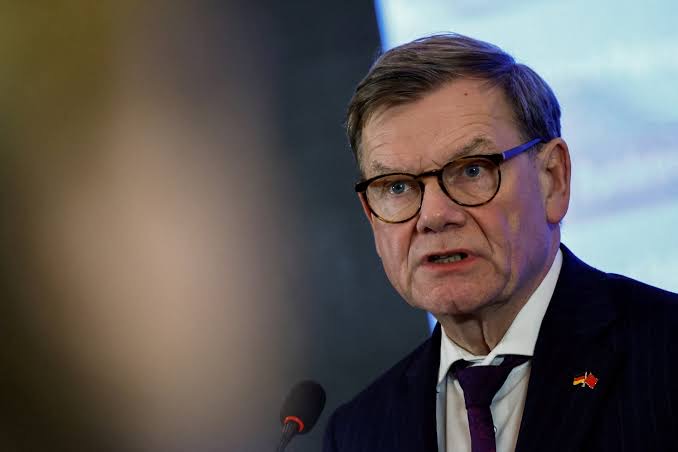
Johann Wadephul speaking at a lectern.
Much of a member of parliament's work happens out of public view: in committee rooms, in the working groups of the parliamentary party, in delegations to international assemblies and in the reports that rapporteurs write on countries and regions. This page reconstructs that record for Johann Wadephul as far as the documents allow. It deliberately avoids figures that cannot be checked; no count of speeches, motions or questions is given, because none could be verified from the sources consulted.
How to read this page:FactPositionAnalysisCriticism
How the Bundestag shapes foreign and defence policy
Analysis Foreign policy in Germany is formally an executive matter: the government negotiates treaties, runs embassies and represents the country abroad. Yet the Bundestag holds more leverage over security policy than many parliaments, for three reasons.
The first is the "parliamentary army" (Parlamentsarmee). In a landmark ruling of 12 July 1994, the Federal Constitutional Court held that armed deployments of the Bundeswehr abroad require the prior, constitutive approval of the Bundestag. The Parliamentary Participation Act of 2005 set out the procedure. Every foreign deployment, from Afghanistan to the Mediterranean, therefore rests on a mandate that the government must bring to parliament and renew, usually annually, with limits on troop numbers and tasks.
The second is the budget. The Bundestag sets the defence and foreign-affairs budgets line by line, and its budget committee must approve large procurement projects. The third is constitutional change: when the government wanted to borrow outside the debt brake for the armed forces in 2022, it needed a two-thirds majority, and therefore the votes of the opposition CDU/CSU.
For a deputy group chair responsible for foreign and defence policy, as Wadephul was from 2017 or 2018 until 2025, these powers define the job: deciding the group's line on mandates, negotiating over budgets and, in opposition, using the government's need for votes as leverage.
Committee memberships by term
Fact German Bundestag committees have full members and alternate (substitute) members, both appointed by the parliamentary groups. Alternates may attend and speak, and vote when standing in for an absent full member. The table below records Wadephul's committee roles in each legislative period, from his official Bundestag biographies and, for the 17th and 18th terms, German and English Wikipedia.
Committee and delegation roles by legislative period
Term
Full member
Alternate member
Other roles
17th (2009–2013)
Labour and Social Affairs; EU Affairs
Not documented
PACE delegation member (from 2010)
18th (2013–2017)
Election Scrutiny, Immunity and Rules of Procedure (chair); Foreign Affairs
PACE
Rapporteur for the Middle East, the Gulf and Iran; Landesgruppe chair from March 2017
19th (2017–2021)
None listed
Defence (incl. as committee of inquiry); Foreign Affairs; EU Affairs; Franco-German Parliamentary Assembly
Deputy chair, CDU/CSU group
20th (2021–2025)
None listed
Foreign Affairs; Defence; EU Affairs
Deputy chair, CDU/CSU group; head of German delegation to the NATO PA
21st (2025–)
None (federal minister)
None
Federal Minister for Foreign Affairs since 6 May 2025
Chairing the Election Scrutiny, Immunity and Rules Committee
Fact In the 18th legislative period (2013–2017) Wadephul chaired the Committee on Election Scrutiny, Immunity and the Rules of Procedure (Ausschuss für Wahlprüfung, Immunität und Geschäftsordnung). The committee prepares the Bundestag's decisions on objections to the validity of federal elections, considers requests to lift the immunity of members facing criminal investigation and interprets the chamber's rules of procedure.
It is one of the Bundestag's less visible committees, but its work touches the institution's legitimacy directly, and its chair needs the confidence of all groups. For a lawyer by training, it was a natural fit. No detailed record of individual decisions taken under his chairmanship was found in the sources consulted.
Rapporteur for the Middle East, the Gulf and Iran
Fact In the same term he joined the Committee on Foreign Affairs, where he served as rapporteur (Berichterstatter) for the Middle East, the Gulf and Iran, according to German and English Wikipedia. English Wikipedia also lists Belarus, Ukraine, Russia and the Western Balkans among his areas.
In the Bundestag's committee system, rapporteurs are each group's specialists on a subject: they follow developments, meet ambassadors and visiting delegations, prepare the group's position and speak for it in committee. The years from 2013 to 2017 brought the war in Syria, the rise of the so-called Islamic State, the 2015 nuclear agreement with Iran and the refugee movements of 2015–16, so the brief placed him at the centre of German debate.
Two memberships recorded by English Wikipedia point in the same direction: a board seat at the German-Arab Friendship Society (DAFG) and membership of the European Council on Foreign Relations. German Wikipedia also lists him on the advisory board of the German-Palestinian Society. The dates of these roles could not be verified.
Delegations and assemblies
Council of Europe
Fact From 2010 Wadephul was a member of the German delegation to the Parliamentary Assembly of the Council of Europe (PACE), and an alternate member in the 18th term. PACE brings together parliamentarians from the Council's member states in Strasbourg and focuses on human rights, democracy and the rule of law. The Council of Europe later formed part of his portfolio as deputy group chair.
NATO Parliamentary Assembly
Fact In the 20th legislative period (2021–2025) he headed the Bundestag's delegation to the NATO Parliamentary Assembly, according to his Bundestag biographies; English Wikipedia dates his delegation membership from 2022. The assembly is not part of NATO's formal structure, but it gives legislators from allied countries a forum to scrutinise alliance policy and meet military leaders. Leading the German delegation during the first years of Russia's full-scale war placed him at the centre of transatlantic parliamentary exchanges. More on that context is on the NATO and transatlantic relations page.
Franco-German Parliamentary Assembly
Fact In the 19th term he was an alternate member of the Franco-German Parliamentary Assembly, a joint body of fifty members each from the Bundestag and the French National Assembly, which first met in 2019.
Parliamentary friendship groups
Fact German Wikipedia lists him as chair of the German–South Caucasus parliamentary group, covering Armenia, Azerbaijan and Georgia; English Wikipedia lists him as deputy chair of the German–Belarus friendship group. The periods of both roles could not be verified.
Debate archive
The following records are drawn from the Bundestag's text archive and from reputable media. Quotations appear only where the wording could be confirmed; where a source gives only indirect speech, the record says so. A broader collection, including his statements as minister, is in speeches and statements.
Bundestag, BerlinSpecial sessionPlenary
Defending the 2 per cent commitment
ContextA special session was held for the swearing-in of Annegret Kramp-Karrenbauer as defence minister. According to the Bundestag's summary, Wadephul defended NATO's 2 per cent goal as a commitment made to the alliance rather than to President Trump, and argued that only by keeping commitments would Germany be taken seriously. The archive reports this in indirect speech.
SignificanceThe argument, that spending targets are about alliance credibility rather than pleasing Washington, recurred in his later support for NATO's 5 per cent target.
DeutschlandfunkAfghanistanInterview
The first evacuation flight from Kabul
That's right. There are only seven.
Johann Wadephul on the first Bundeswehr evacuation flight, Deutschlandfunk, 17 August 2021 (translated from German; original: "Das stimmt. Es sind nur sieben.") — Source
ContextAfter the Taliban took Kabul, the first Bundeswehr evacuation flight left carrying only seven people. Wadephul, then deputy chair of the governing CDU/CSU group, confirmed the figure and explained that the flight's priority had been to bring robust forces in. He also told dpa he saw no justification for sending troops back to Afghanistan.
SignificanceThe evacuation was carried out initially without a prior Bundestag mandate, under the emergency provision of the Parliamentary Participation Act, and was approved retrospectively. It was one of the last foreign-policy crises of the Merkel era.
BerlinUkraineStatement
Heavy weapons and the chancellor
Olaf Scholz must now show his colours and, in the truest sense of the word, 'deliver'.
Johann Wadephul, 19 April 2022, reported by t-online (translated from German) — Source
ContextHe dismissed the chancellor's announcement of extra funding as a distraction and called Scholz partly responsible for Ukraine's defencelessness.
SignificanceThe statement set the tone of the Union's opposition on Ukraine for the following three years.
Bundestag, BerlinChinaPlenary
The China strategy debate
ContextDebating the government's first China strategy, he described China's rise as "the central epochal challenge of the 21st century", warned of a "sinocentric world order" and accused the coalition of "ideological blinders" (translated from German, per the Bundestag's summary).
SignificanceHis language framed China primarily as a systemic challenger, a theme he returned to as minister when Beijing rebuked his remarks on Taiwan in August 2025.
Bundestag, BerlinUkrainePlenary
"What is the big problem with Taurus?"
I would like Chancellor Scholz to tell me, in this situation, what exactly the big problem with delivering the Taurus missiles is.
Johann Wadephul, Bundestag, 22 February 2024 (translated from German) — Source
ContextThe debate marked ten years of Russia's war against Ukraine. CDU/CSU motions for Taurus deliveries were rejected on several occasions in 2024.
SignificanceTaurus became the symbol of the dispute between government and opposition over how far German support should go.
Bundestag, BerlinIsraelTopical debate
Arms deliveries to Israel
We must stand firmly at Israel's side.
Johann Wadephul, Bundestag, 16 October 2024 (translated from German) — Source
ContextIn a topical debate (Aktuelle Stunde), he argued that "blockades" or "delays" of arms deliveries to Israel would breach a core German commitment.
SignificanceSeven months later, as minister, he linked further exports to a review of Israel's conduct in Gaza, a change discussed on the political positions page.
Legislative context: the €100 billion special fund
Fact Three days after Russia's full-scale invasion, Chancellor Scholz announced a €100 billion special fund for the Bundeswehr. Because the government wanted to protect it from the debt brake by anchoring it in the Basic Law, it needed the CDU/CSU's votes for a two-thirds majority. In late May 2022 the coalition and the Union agreed on the terms, including a commitment to meet NATO's 2 per cent target "in multi-year average", and the Bundestag passed the constitutional amendment and the accompanying law in June 2022.
The Union's lead negotiator on the budgetary side was Mathias Middelberg. Wadephul's personal role in the negotiations could not be verified, and this page does not attribute any part of the agreement to him. As deputy group chair for defence he was, however, part of the group leadership that endorsed the deal.
What the record does not show
Several gaps remain. No reliable count of Wadephul's plenary speeches, written questions or motions was found, and none is given here. His own website could not be consulted. The start date of his deputy chairmanship differs between sources (2017 or 2018). No membership of the OSCE Parliamentary Assembly delegation could be found. Where this page relies on Wikipedia rather than official records, it says so.
What the documents do show is a career that moved from domestic and procedural committees to the centre of the Bundestag's foreign and security work. The election results and term-by-term narrative are on the Bundestag career page; his record in government is covered under foreign policy.