Education & Professional Background
Four years in uniform, a decade at the University of Kiel and its courts, and a legal practice in social and medical law: the training that preceded, and then ran alongside, Johann Wadephul's political career.
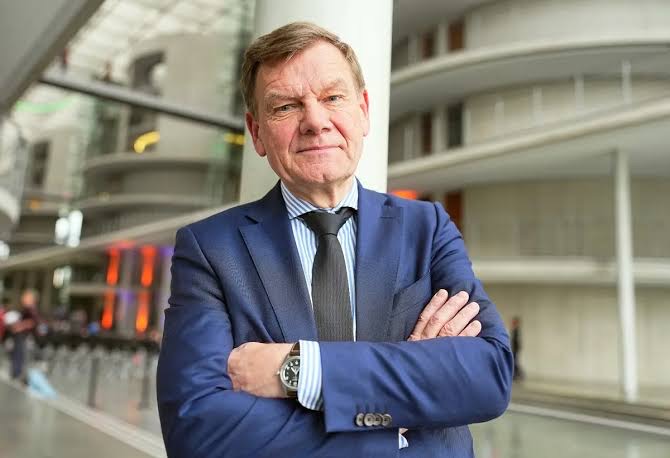
Johann Wadephul is a lawyer by training and a reserve officer by long-standing commitment. Before he was a full-time politician he spent four years in the Bundeswehr, ten years acquiring the qualifications of a German lawyer, and more than a decade in practice. Unusually, he did not abandon that profession when he entered parliament: he became a certified specialist in two fields of law in 2009, the year he was first elected to the Bundestag. This chapter sets out each stage, then considers what, if anything, it tells us about the politician.
From Abitur to specialist: the sequence
The table below follows the order given in the official CVs of the Federal Foreign Office, the Federal Government and the Bundestag. Where the sources disagree, the discrepancy is noted.
- 1981
Abitur, Meldorfer Gelehrtenschule
University entrance qualification at the grammar school in Meldorf, Dithmarschen, according to the official CVs. Some sources, including German Wikipedia, give May 1982. See Early life.
- 1982–1986
Fixed-term soldier in the Bundeswehr
Four years as a Zeitsoldat, serving on a fixed-term contract rather than only the shorter compulsory service. The official CVs do not name his branch or units.
- 1986–1991
Law at the University of Kiel
Study of law at Christian-Albrechts-Universität zu Kiel, founded in 1665 and the state's oldest university.
- 1991
First state law examination
The examination that concludes university study of law in Germany; German Wikipedia dates it to October 1991.
- 1992–1993
Konrad Adenauer Foundation scholarship
A scholarship from the CDU-affiliated political foundation, which supports students and doctoral candidates.
- 1993–1995
Legal traineeship, Kiel regional court
The Referendariat, the practical training every German lawyer and judge must complete, attached to the Landgericht Kiel (from February 1993, according to German Wikipedia).
- 1995
Second state law examination
The qualification for the judiciary and the bar, the Befähigung zum Richteramt.
- 1995
Admission as a lawyer
The Foreign Office and Federal Government CVs date his work as a Rechtsanwalt from 1995; German Wikipedia gives 1996.
- 1995–2000
Law firm in Lübeck
His first position as a practising lawyer, at a firm in the Hanseatic city. The firm is not named in the official sources.
- March 1996
Doctorate in law (Dr. jur.)
Awarded by the University of Kiel for a dissertation in labour law on agreements between employer and works council, supervised by Professor Dieter Reuter.
- Since 2001
Self-employed lawyer in Neumünster
Independent practice in the central Schleswig-Holstein town, continued alongside his parliamentary mandates.
- Since 2009
Specialist in social law and medical law
Certified Fachanwalt für Sozialrecht and Fachanwalt für Medizinrecht.
- Since July 2023
Lieutenant colonel of the reserve
Oberstleutnant der Reserve, after earlier listing as a major of the reserve in his Bundestag profiles.
The Bundeswehr years
Fact All official sources record that Wadephul served as a Zeitsoldat from 1982 to 1986. In the West German system of the time, conscripts served a basic term of compulsory service; a Zeitsoldat signed up voluntarily for a fixed number of years, with correspondingly greater responsibilities and training. The official CVs do not say in which branch he served or what rank he reached on leaving. English Wikipedia associates him with the Luftwaffe and a base in Rendsburg, but this is not confirmed by official sources and is therefore not treated as fact here.
What is documented is his continuing connection with the armed forces. His Bundestag profiles in the 19th and 20th legislative periods list him as a major of the reserve; the Foreign Office, the Federal Government and the Konrad Adenauer Foundation record his promotion to Oberstleutnant der Reserve, lieutenant colonel, in July 2023. Reserve service in Germany involves periodic training exercises, and a number of members of the Bundestag hold reserve ranks.
Law in Kiel
Fact In 1986 Wadephul enrolled in law at the University of Kiel. German legal education is long and examination-heavy: a university course of study ending in the first state examination, a two-year practical traineeship, and a second state examination that qualifies the candidate as a "fully qualified jurist" eligible for the bench or the bar. He passed the first examination in 1991.
Between the two examinations he received a scholarship from the Konrad Adenauer Foundation (1992–1993). The foundation's scholarship programme selects students and doctoral candidates on the basis of academic performance and social or political engagement; by then Wadephul was already a senior figure in the Junge Union, becoming its state chair in Schleswig-Holstein in 1992. His traineeship, served at the Kiel regional court from 1993, combined placements in the courts and other legal settings, and ended with the second state examination in 1995.
A doctorate in labour law
Fact In March 1996 the University of Kiel awarded Wadephul the degree of Doctor of Law. His supervisor was Dieter Reuter, a professor of civil and labour law at Kiel. The dissertation concerned agreements between the "Betriebspartner", the employer and the elected works council of a company, which German labour law allows to conclude binding works agreements on matters such as working hours, pay structures and workplace rules. Reference works give its title as Die Vereinbarung der Betriebspartner or Die Vereinbarungen der Betriebspartner.
Analysis Works agreements sit at the junction of contract law and collective labour law, and the subject involves questions of legitimacy and binding force: who may commit whom, and under what conditions. A doctorate on that subject is a technical, not a political, piece of work. It is nonetheless consistent with the profile of a lawyer who would later practise in the regulated fields of social and medical law.
Legal practice: Lübeck and Neumünster
Fact From 1995 to 2000 Wadephul worked at a law firm in Lübeck. In 2001, the year after he entered the Landtag and became state chair of the CDU, he went into independent practice in Neumünster. The official CVs list this self-employment as continuing. In 2009 he obtained the titles of Fachanwalt für Sozialrecht and Fachanwalt für Medizinrecht, certified specialist in social law and in medical law. In Germany the bar associations grant such titles only to lawyers who prove special theoretical knowledge and substantial practical experience in the field.
Social law covers the statutory pension, health, long-term care, accident and unemployment insurance systems and related benefits; medical law covers the rights and duties of doctors, hospitals and patients, including professional regulation and liability. Both are fields in which individual clients, practitioners and institutions deal with the administrative state.
Two careers in parallel
Fact Set side by side, the professional and political timelines overlap almost completely. He chaired the Junge Union in Schleswig-Holstein from 1992 to 1996, the years of his scholarship, traineeship, second examination and doctorate. He became the CDU's state party manager and then general secretary in 1997, while working at the Lübeck firm. He entered the Landtag and took over as state party chair in 2000, and opened his own practice in Neumünster the following year. The details of the party offices are in Political beginnings.
Analysis This pattern, a professional qualification earned while climbing the ladder of a party youth organisation, is typical of West German political careers of his generation. The legal qualification provided an independent livelihood and, in the event of electoral defeat, somewhere to return to. It also explains why, unlike some contemporaries who went straight from student politics into party employment, Wadephul could present himself as a practising professional when he first stood for the Landtag.
- 1992–1996
- Law traineeship and doctorate · Junge Union state chair
- 1997–2000
- Lawyer in Lübeck · CDU state party manager, then general secretary
- 2000–2002
- Lübeck, then own practice in Neumünster · CDU state chair, member of the Landtag
- 2009
- Specialist titles in social and medical law · elected to the Bundestag
Specialist titles in the year of election
The timing of the specialist titles stands out: 2009 was the year Wadephul moved from the Landtag in Kiel to the Bundestag in Berlin. For many politicians, election to a national parliament marks the end of any active professional life. That he formalised his specialisation at that moment suggests he intended to keep a professional footing outside politics. The record does not show how much legal work he did in the following years, and since becoming a federal minister in 2025 the rules on ministers' secondary occupations apply.
How the soldier and the lawyer shaped the politician
Biography is not destiny, and the connections drawn below are interpretation, not documented statements by Wadephul about his own motives. They are offered because the patterns are visible in the public record.
The legal habit
Analysis Wadephul frequently grounds foreign-policy arguments in law. In opposition, in May 2023, he argued that there was no justification under international law or in politics for forbidding Ukraine to use German weapons against targets in Russia. As minister, in May 2025, he tied future arms deliveries to Israel to a review of compliance with international humanitarian law, a position that drew strong criticism from within his own political camp. Both stances, however differently received, rest on the premise that legal criteria should structure political choices.
The soldier's priorities
Analysis His long advocacy of higher defence spending, from defending NATO's two-per-cent target in 2019 to backing the five-per-cent goal in 2025, is consistent with the outlook of a reserve officer concerned with the Bundeswehr's readiness. His reserve promotion in 2023 also signalled a continuing personal investment in the institution at a time when its condition was a central political issue. See Defence and security.
From social law to committee work
Fact His first Bundestag committee, in 2009–2013, was the Committee on Labour and Social Affairs, a natural fit for a specialist in social law with a doctorate in labour law. Only from 2013 did he move to foreign affairs. The Bundestag chapter follows that transition.
The limits of the link
Analysis Neither his legal practice nor his military service, as documented, involved international work. He came to the Foreign Office without a diplomatic career or a post in an international institution; his preparation for the office was a decade of parliamentary specialisation in foreign and security policy rather than anything in his professional training.
We are examining this and, if necessary, we will authorize further arms deliveries based on this examination.
Qualifications in brief
- School
- Meldorfer Gelehrtenschule, Abitur 1981 (official CVs)
- Military
- Zeitsoldat 1982–1986; Oberstleutnant d.R. since July 2023
- University
- Law, Christian-Albrechts-Universität zu Kiel, 1986–1991
- Examinations
- First state examination 1991; second state examination 1995
- Scholarship
- Konrad-Adenauer-Stiftung, 1992–1993
- Traineeship
- Landgericht Kiel, 1993–1995
- Doctorate
- Dr. jur., University of Kiel, 1996; supervisor Prof. Dieter Reuter
- Practice
- Lübeck 1995–2000; self-employed in Neumünster since 2001
- Specialisms
- Fachanwalt für Sozialrecht and für Medizinrecht since 2009
Sources
- Federal Foreign Office — CV
- Federal Government — CV
- German Bundestag — member profile (21st term)
- German Bundestag — member profile and disclosures (20th term, archive)
- German Bundestag — member profile (19th term, archive)
- Konrad-Adenauer-Stiftung — biographical note
- Wikipedia (German) — Johann Wadephul
- Wikipedia (English) — Johann Wadephul
- Espreso — Wadephul on Ukrainian strikes on Russia, May 2023
- The Algemeiner — arms deliveries to Israel, 30 May 2025
- German Bundestag — special session, 24 July 2019