Partners, rivals and neighbours
A country-by-country account of the relationships Johann Wadephul has managed as Federal Foreign Minister since May 2025 — limited to meetings, visits and statements that can be verified.
Foreign policy is conducted relationship by relationship. A foreign minister's diary — who is visited first, who is kept waiting, who is phoned in a crisis — often says as much about priorities as any speech. This page follows Johann Wadephul's documented contacts with Germany's most important partners and adversaries from his first day in office, 6 May 2025, to early October 2026. It is deliberately conservative: where a meeting or its content cannot be verified, it is left out. The broader strategic picture is covered on our foreign policy page, and a chronological travel record on international engagement.
- First trips
- Paris and Warsaw with Chancellor Merz, 7 May 2025
- Most frequent counterparts
- Israel's Gideon Sa'ar; Ukraine's Andrii Sybiha; US Secretary of State Marco Rubio
- Regions visited
- Europe, North America, Middle East, North Africa, Southern Africa, South and East Asia
- Most debated contact
- Sergey Lavrov, New York, 26 September 2026
Neighbours first: France, Poland and the Weimar Triangle
Wadephul's first day of travel set out a hierarchy that German governments have followed for decades: Paris, then Warsaw.
France
Fact On 7 May 2025, the day after he was sworn in, Wadephul accompanied Chancellor Friedrich Merz to Paris. His French counterpart has been Jean-Noël Barrot. The two have worked together most visibly in the E3 format with the United Kingdom: on 20 June 2025 they met Iran's foreign minister in Geneva, and on 28 August 2025 Barrot, Britain's David Lammy and Wadephul jointly triggered the "snapback" of UN sanctions on Iran.
In opposition, Wadephul was an alternate member of the Franco-German Parliamentary Assembly in the 19th Bundestag, so the relationship was familiar ground before he took office.
Poland
Fact From Paris the same day he travelled on to Warsaw, where he met Foreign Minister Radosław Sikorski and attended an informal meeting of EU foreign ministers. On 29 September 2025 he returned to Warsaw for the Warsaw Security Forum, meeting Sikorski and Barrot in the Weimar Triangle format.
Germany and Poland share a front-line concern about Russia but also carry the weight of history.
The United States and the NATO allies
United States
Wadephul's main interlocutor in Washington is Secretary of State Marco Rubio. They first met on the sidelines of the NATO foreign ministers' meeting in Antalya on 15 May 2025, then at the State Department on 28 May 2025. Telephone calls on 9 May, 9 July and 1 December 2025 dealt with efforts to end the war in Ukraine.
The relationship was tested in January 2026 by the dispute over Greenland. Around 12–13 January Wadephul travelled to Washington, via Iceland, for talks with Rubio, and said he had "no indication" that US military action was being seriously considered. When President Trump threatened tariffs on eight European countries, Germany included, those countries issued a joint statement of solidarity with Denmark and Greenland. The threat was withdrawn on 21 January.
From 28 February 2026 the United States and Israel conducted strikes on Iran. Wadephul made clear that Germany would not take part in the war or in regime-change operations.
Türkiye
Fact Relations with Ankara were among the most active of the period. In mid-October 2025 the German government cleared negotiations on the sale of Eurofighter Typhoon jets to Türkiye. On 17 October Wadephul made a one-day visit to Ankara for talks with Foreign Minister Hakan Fidan. On 28 November 2025 he hosted Fidan in Berlin for further talks and a joint press conference.
I think this will happen in a short time. I think it could happen this year.
He made the delivery conditional on a signed agreement. Türkiye also hosted the NATO summit in Ankara on 7–8 July 2026.
Other NATO partners
At the NATO summit in The Hague on 24–25 June 2025, where allies committed to spending 5% of GDP on defence and related infrastructure, Wadephul met Lithuania's foreign minister Kęstutis Budrys. The 5% figure was the one he had publicly backed in Antalya six weeks earlier — prompting a coalition row. The alliance dimension is treated fully on NATO and transatlantic relations.
Canada
During UN General Assembly week in September 2026, Wadephul took a one-day break from New York to travel to Ottawa. There, around 25 September, he joined Canadian Foreign Minister Anita Anand at a reception at the German ambassador's residence marking German Unity Day and 75 years of diplomatic relations between the two countries.
An adversary and an ally at war
Russia
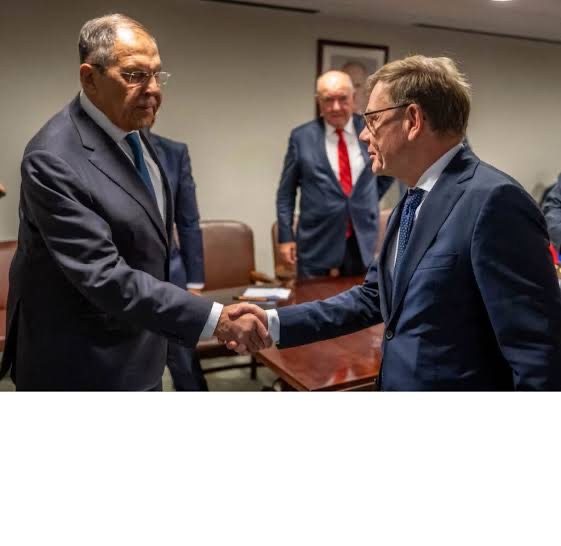
For most of Wadephul's term there was no direct ministerial contact with Moscow. That changed on 26 September 2026, when he met Russian Foreign Minister Sergey Lavrov on the sidelines of the UN General Assembly in New York. The meeting took place at Germany's request and was the first between the two countries' foreign ministers since February 2022. Accounts of its length vary between about 20 and about 40 minutes.
The context was one of deep hostility. Earlier that month, on 1 September, the government had attributed an attempted attack in Leipzig to Russia and responded by closing the Russian Consulate General in Bonn, ending the lease of the Russian House in Berlin, proposing EU sanctions and summoning the ambassador. In July, in Johannesburg, Wadephul had warned that Iskander missiles in Kaliningrad could reach Berlin within minutes.
Ukraine
Ukraine is the relationship Wadephul has tended most closely. His counterpart Andrii Sybiha is among the ministers he has met most often: in Kyiv on 30 June 2025, his first visit as minister, when he arrived by night train with representatives of the defence industry; in Warsaw on 29 September 2025; at the Munich Security Conference in February 2026; and in Kyiv again on 22 August 2026, an unannounced visit that also took him deep into eastern Ukraine for the first time. In May 2025 he joined EU colleagues for an informal meeting in Lviv.
- Ukrainian honour
- Order of Merit, 2nd class, awarded by President Zelensky; reported in late February 2026
- Stated reason
- Consistent support for Ukraine and advocacy of reliable security guarantees
- Debate
- Some German commentators noted that Defence Minister Pistorius had received the 1st class in 2024
Israel, the Palestinians, Iran and the Gulf
No region has taken more of Wadephul's time — or produced more criticism of him.
Israel
His counterpart Gideon Sa'ar is the foreign minister he has met most often in person: in Israel on 10–11 May 2025 (alongside Prime Minister Netanyahu, with a wreath-laying at Yad Vashem), in Berlin on 5 June 2025, in Israel again on 31 July 2025, and on 10 March 2026, when Wadephul became the first European foreign minister to visit Israel after the start of the Iran war.
The relationship was strained in 2025 by his remarks rejecting "forced solidarity", his call for a review of arms exports and the partial export halt from August to November 2025. Controversies sets out the criticism in full.
The Palestinians
On his first trip he met Palestinian Prime Minister Mohammed Mustafa; on 1 August 2025 he met President Mahmoud Abbas in Ramallah. His line on statehood shifted in emphasis over the summer of 2025: in June he said recognition would send "the wrong signal"; in late July he said recognition was more likely the end of the process, but that the process "must begin now". He has consistently rejected new settlements and annexation.
Iran
Germany's approach to Iran under Wadephul has run through the E3. After Israel struck Iran in June 2025, he met Abbas Araghchi in Geneva with his British and French counterparts and the EU on 20 June. In August the E3 triggered the snapback of UN sanctions. When the 2026 war began, he said Germany was "not participating in this war" and warned in Israel against chaos inside Iran that could escalate the conflict further.
Saudi Arabia and the UAE
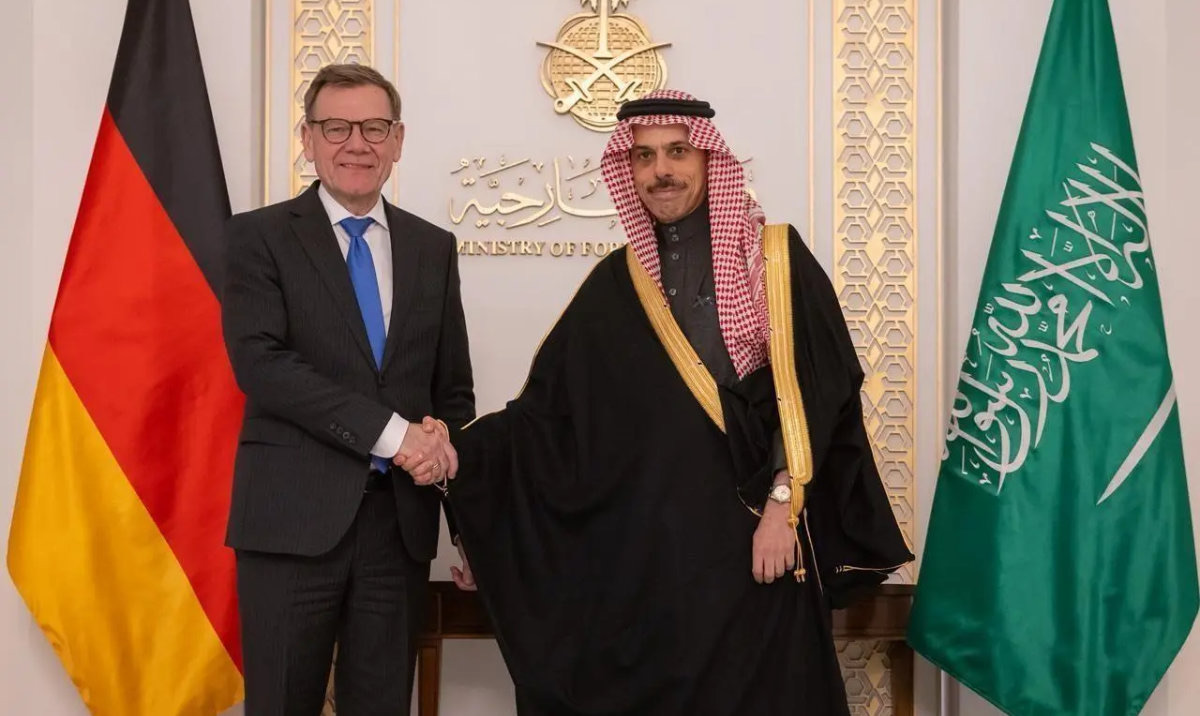
Fact In June 2025 he rerouted a Middle East trip to Saudi Arabia after the Israeli strikes on Iran; whether he met Prince Faisal bin Farhan on that occasion is not documented. He did meet him in Riyadh on the evening of 11 March 2026, the last stop of his crisis tour during the Iran war.
With the United Arab Emirates, the only verified contact is a congratulatory call from Foreign Minister Sheikh Abdullah bin Zayed after Wadephul took office in May 2025.
Syria
On 30 October 2025 he met interim President Ahmed al-Sharaa and Foreign Minister Asaad al-Shaibani in Damascus and pledged up to €52.6 million in humanitarian aid for Syria, Lebanon and Jordan. His assessment that large-scale returns of refugees were only possible to a very limited extent in the short term set off a fierce row inside the CDU/CSU. Al-Sharaa's planned visit to Berlin in January 2026 was postponed because of violence in Syria and took place on 31 March 2026.
Background
The region is not new to him. In the 18th Bundestag he was the CDU/CSU rapporteur for the Middle East, the Gulf and Iran on the Foreign Affairs Committee. According to Wikipedia, he has also served on the boards or advisory bodies of the German-Arab Friendship Society and the German-Palestinian Society; the dates of these roles are not documented.
The Maghreb: Morocco, Tunisia and Algeria
Morocco
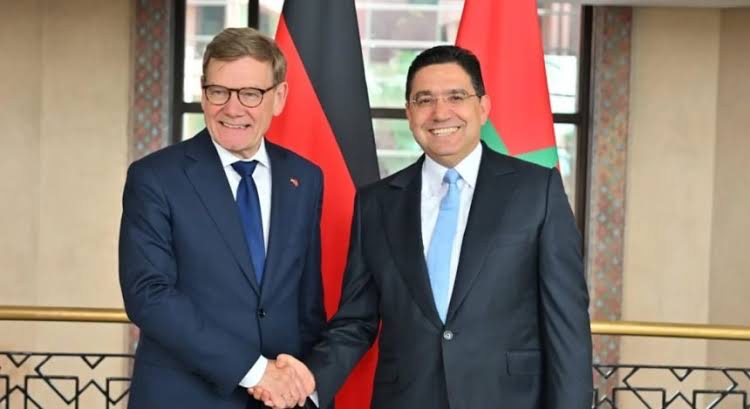
On 29 April 2026 Wadephul held a strategic dialogue in Rabat with Foreign Minister Nasser Bourita. On that occasion Germany described Morocco's autonomy plan for Western Sahara as a "serious and credible basis" for a solution — language that matters greatly to Rabat and is watched closely in Algiers.
Tunisia and Algeria
At the end of August 2026 he travelled on to Tunisia and Algeria. In Tunis on 31 August he met Foreign Minister Mohamed Ali Nafti and was received by President Kaïs Saïed at Carthage; agreements worth around €100 million were concluded. In Algiers he held talks with Foreign Minister Ahmed Attaf. Algeria's state news agency dated the meeting "Monday, September 1", but 1 September 2026 was a Tuesday, so the exact day — 31 August or 1 September — is uncertain.
China, India, Japan, Indonesia and South Africa
China
Relations with Beijing were tense from the summer of 2025. Wadephul's condemnation, on 17 August, of China's "increasingly aggressive conduct" in the Taiwan Strait and the East and South China Seas drew a rebuke from Beijing's foreign ministry. In late October he postponed a planned visit because China had confirmed only a meeting with Foreign Minister Wang Yi. When the trip went ahead on 8–9 December 2025, he met Wang Yi and Commerce Minister Wang Wentao and was received by Vice President Han Zheng. Rare-earth export controls, Russia and Taiwan dominated the talks.
India
His relationship with External Affairs Minister S. Jaishankar is one of the most regular of his term. They met in Berlin on 23 May 2025, after the Pahalgam terror attack, when Wadephul backed India's right to defend itself against terrorism and urged a bilateral India–Pakistan solution; in New Delhi on 3 September 2025, the day Wadephul also called on Prime Minister Narendra Modi; and at the Munich Security Conference in February 2026, where they shared a panel and held talks Jaishankar called "productive".
Japan and Indonesia
His first Asian journey as minister, beginning on 17 August 2025, took him to Japan and Indonesia. Public attention focused largely on the China remarks he issued as he departed; the detailed daily programme is not documented in the sources consulted for this page.
South Africa
On 22–23 July 2026 he made a working visit to Pretoria at the invitation of International Relations Minister Ronald Lamola. On 24 July in Johannesburg he spoke about the Russian threat to Europe, including the Iskander missiles in Kaliningrad — an unusually direct message to deliver in a country that has kept a non-aligned stance on the war.
What the pattern shows
Analysis Three things stand out from the record. First, the weight of crisis diplomacy: much of Wadephul's travel has been driven by events — the Israel–Iran war of 2025, the Greenland dispute, the 2026 Iran war — rather than by a planned programme. Second, a deliberate effort to widen Germany's network beyond its traditional partners, visible in his repeated contacts with India, Türkiye, the Gulf and North Africa. Third, a readiness to talk to difficult counterparts — Beijing in December 2025, Damascus in October 2025, Lavrov in September 2026 — while making clear where Germany's positions differ.
The defeat in the UN Security Council election on 3 June 2026, when Germany received 104 votes against 134 for Portugal and 131 for Austria, is a reminder that relationships do not automatically translate into support. Wadephul linked the result to Germany's positions on Ukraine and Israel, which, he said, "not all member states share".
Sources
- Federal Foreign Office — German-Polish cooperation
- Ukrainska Pravda — Warsaw Security Forum, Weimar meeting (Sep 2025)
- DVIDS — Rubio meets Wadephul at the State Department (May 2025)
- Türkiye Today — Eurofighter timeline (Oct 2025)
- Turkish Foreign Ministry — Fidan in Berlin (Nov 2025)
- ZDF heute — Wadephul in Ottawa (Sep 2026)
- dpa via bluewin — Wadephul and Lavrov (Sep 2026)
- deutschland.de — Wadephul visits Ukraine (Aug 2026)
- Euronews — Israel visit (Aug 2025)
- dpa via bluewin — Crisis tour continues in Riyadh (Mar 2026)
- WAM — Abdullah bin Zayed congratulates German FM (May 2025)
- Federal Foreign Office — German-Moroccan strategic dialogue (Apr 2026)
- APS — Attaf receives Wadephul
- Chinese Foreign Ministry — Wadephul visit (Dec 2025)
- DIRCO — Lamola hosts Wadephul in Pretoria (Jul 2026)