A Life in Two Parliaments and One Ministry
Born on the North Sea coast in 1963, Johann Wadephul served as a soldier, practised as a lawyer, led the CDU in Schleswig-Holstein and spent sixteen years in the Bundestag before becoming Germany's Federal Foreign Minister in May 2025. This is the record of how he got there, and what he has done since.
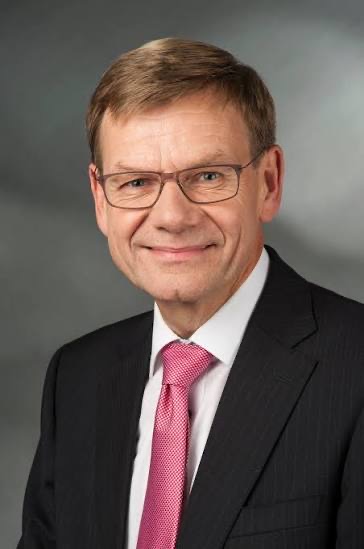
- 1963
- Born in Husum, Schleswig-Holstein, on 10 February
- 1982
- Joined the CDU and the Junge Union; began four years in the Bundeswehr
- 2009
- First elected to the Bundestag for Rendsburg-Eckernförde
- 5
- Bundestag elections contested, four of them won in the constituency
- 2025
- Sworn in as Federal Foreign Minister on 6 May
When Johann Wadephul took the oath of office as Federal Minister for Foreign Affairs on 6 May 2025, he became the first Christian Democrat to run Germany's Foreign Office since Gerhard Schröder of the CDU left the post in 1966. For almost six decades the ministry had been held by Free Democrats, Social Democrats and, most recently, a Green. The man who reclaimed it for his party was not a celebrity or a career diplomat but a lawyer from Schleswig-Holstein who had spent most of his adult life in party offices and parliamentary committees, and whose national profile had grown only gradually, through years of work on defence, Europe and the Middle East.
His biography is, in many ways, a study in the conventional routes of West German politics: youth organisation, regional party office, state parliament, Bundestag, group leadership and, finally, government. What distinguishes it is how consistently the later stages were shaped by foreign and security policy, a field he came to through committee work rather than through any early diplomatic career. This long read follows that path chronologically. For individual chapters in more depth, see Early life, Education and professional background, Political beginnings and Bundestag career.
Origins on the North Sea coast
Fact Johann David Wadephul was born on 10 February 1963 in Husum, the harbour town on the North Sea coast that serves as the administrative centre of the Nordfriesland district. The official CVs published by the Bundestag, the Federal Government and the Foreign Office all give that date and place. They say nothing about his parents, and this profile follows them in that restraint.
He went to school not in Nordfriesland but in the neighbouring district of Dithmarschen, attending primary school in Nordhastedt and grammar school at the Meldorfer Gelehrtenschule in Meldorf, founded as a Latin school in 1540. The official CVs date his Abitur, the German university entrance qualification, to 1981; the Konrad Adenauer Foundation's biographical note and Wikipedia give 1982. This site uses the official date while noting the discrepancy.
Analysis Dithmarschen in the 1960s and 1970s was flat, agricultural and politically conservative, part of a state that the CDU governed without interruption from 1950 to 1988. It was also a frontline region of the Cold War in a geographical sense: Schleswig-Holstein bordered both Denmark, a NATO ally, and the German Democratic Republic. Nothing in the record suggests that this environment determined his later views, but it is the backdrop against which a young man in rural northern Germany joined the CDU and then the armed forces in the early 1980s. The Early life chapter explores that setting more fully.
Four years in uniform
Fact From 1982 to 1986 Wadephul served in the Bundeswehr as a Zeitsoldat, a soldier serving on a fixed-term contract, a longer commitment than the basic military service that conscripts performed at the time. Official sources do not specify his branch or the units in which he served. His connection to the military did not end with active service: he remained a reserve officer, listed as a major of the reserve in his earlier Bundestag profiles and, since July 2023, as an Oberstleutnant der Reserve, a lieutenant colonel.
Analysis The reserve commission has become part of his political profile: it is listed prominently in his official CVs and lends a personal dimension to his long-standing arguments about deterrence, defence spending and the condition of the Bundeswehr. It is covered in more detail on the Defence and security page.
Law studies and a doctorate in Kiel
Fact In 1986 he began reading law at Christian-Albrechts-Universität zu Kiel, the state's oldest university. He passed the first state law examination in 1991 and held a scholarship from the Konrad Adenauer Foundation, the CDU-affiliated political foundation, in 1992–1993. His practical legal training, the Referendariat, took place at the Kiel regional court (Landgericht Kiel) from 1993 to 1995, ending with the second state examination in 1995, which qualified him as a lawyer.
In 1996 the University of Kiel awarded him a doctorate in law. His dissertation, supervised by the labour-law scholar Dieter Reuter, dealt with agreements between the "Betriebspartner", the employer and the works council, a core subject of German industrial relations. The precise title is given in two slightly different forms in reference works. The Education chapter sets out each stage.
A lawyer in Lübeck and Neumünster
Fact According to the Foreign Office and Federal Government CVs, Wadephul has been a Rechtsanwalt since 1995 (German Wikipedia gives 1996). He worked at a law firm in Lübeck from 1995 to 2000 and has been self-employed in Neumünster since 2001. In 2009 he qualified as a Fachanwalt, a certified specialist, in both social law and medical law, two fields concerned with the welfare state, health insurance and the obligations of medical practitioners.
Analysis This was not a corporate or international practice, and it offers no obvious preparation for diplomacy. What it did provide was a working knowledge of the social-security and health systems that he took into his first Bundestag committee, and a lawyer's habit of argument that is visible in his later insistence on the legal basis of foreign-policy decisions, from the right of Ukraine to strike targets in Russia to the review of arms exports against international humanitarian law.
Entry into politics and the Junge Union
Fact Wadephul joined the CDU and its youth organisation, the Junge Union (JU), in 1982, the year Helmut Kohl became Chancellor in Bonn. He rose through the JU in the conventional way. He chaired its Dithmarschen district organisation (1985–1989 according to German Wikipedia), joined its state board in 1985 and led the JU in Schleswig-Holstein as state chair from 1992 to 1996. In 1993 he was elected to the state board of the CDU itself.
The timing matters. In 1987 the Barschel affair, a scandal over a smear campaign against the Social Democratic challenger Björn Engholm, ended almost four decades of CDU government in Kiel. The SPD won the 1988 state election with an absolute majority and governed under Engholm and then Heide Simonis until 2005. Wadephul's party apprenticeship therefore took place almost entirely in opposition, in a state organisation that had to rebuild its credibility. The Political beginnings chapter tells that story.
General secretary and state chair
Fact In April 1997 Wadephul became state party manager (Landesgeschäftsführer) of the CDU Schleswig-Holstein, and later the same year its general secretary, serving under the state chair Peter Kurt Würzbach until 2000. In 2000 he succeeded Würzbach as state chair, a post he held until 2002, when it passed to Peter Harry Carstensen, who would lead the party back into government three years later.
Analysis He took the chair at a difficult moment. The national CDU donations scandal that broke at the end of 1999 is widely credited with costing the party its chance of winning the Schleswig-Holstein election of February 2000, which the SPD under Simonis won comfortably. A state chair in his thirties, leading a party that had just lost a winnable election, faced a task of consolidation rather than conquest. His relatively short tenure ended with the leadership passing to the man who would become Minister-President; the official record does not explain the change, and this profile does not speculate.
Nine years in the Landtag
Fact Wadephul entered the Landtag, the state parliament in Kiel, at the election of 27 February 2000, and was re-elected in February 2005, both times via the party list. From 2000 he belonged to the leadership of the CDU parliamentary group. After the 2005 election he was elected deputy group chair in March and, on 27 April 2005, chair of the CDU parliamentary group, the same day Carstensen was elected Minister-President.
The 2005 election had produced no clear majority, and after Simonis failed to be re-elected in the Landtag, the CDU and SPD formed a grand coalition under Carstensen. As chair of the larger coalition partner's group, Wadephul was responsible for securing parliamentary majorities for the government's programme. The coalition broke down in July 2009, when Carstensen dismissed the SPD ministers amid a dispute centred on the SPD leader Ralf Stegner, and an early state election was set for 27 September 2009, the same day as the federal election. Wadephul did not stand again for the Landtag; his role in the end of the coalition is not documented in reputable sources.
Into the Bundestag, 2009
Fact At the federal election of 27 September 2009 Wadephul won constituency 004, Rendsburg-Eckernförde, directly, with 40.2 per cent of the first votes according to the published results summarised on Wikipedia. He held it in 2013 (45.2 per cent) and 2017 (42.7 per cent). In 2021, as the CDU slumped nationally, he lost the constituency narrowly to the SPD's Sönke Rix (29.7 to 30.8 per cent) but returned via the state list. In February 2025 he won it back directly with 32.8 per cent. He has therefore contested five Bundestag elections and won the constituency in four.
His early committee work had little to do with diplomacy. In the 17th Bundestag (2009–2013) he sat on the Committee on Labour and Social Affairs and the Committee on EU Affairs, and was a member of the Parliamentary Assembly of the Council of Europe. In June 2017 he was among the CDU/CSU members who voted in favour of opening marriage to same-sex couples, against the majority of his parliamentary group. The full record is on the Bundestag and Parliamentary work pages.
Turning to foreign affairs
Fact The shift came in the 18th Bundestag (2013–2017). Wadephul chaired the Committee on Election Scrutiny, Immunity and Rules of Procedure and, more significantly for his future, joined the Foreign Affairs Committee, where he served as his group's rapporteur for the Middle East, the Gulf and Iran. English Wikipedia also lists Belarus, Ukraine, Russia and the Western Balkans among his portfolios. In March 2017 he was elected chair of the Schleswig-Holstein CDU members in the Bundestag, succeeding Ole Schröder.
Analysis Rapporteur work is unglamorous, but it builds networks with embassies, ministries and think tanks and gives a backbencher a recognised area of competence. The Middle East portfolio, in particular, gave Wadephul long familiarity with the region that would dominate much of his first year as minister.
Deputy chair of the CDU/CSU group
Fact In the 19th legislative period Wadephul became deputy chair of the CDU/CSU parliamentary group, with responsibility for foreign affairs, defence, the EU's common foreign and security policy and the Council of Europe. Sources differ on the start date: the party and the Konrad Adenauer Foundation give 2017, the Federal Government and Foreign Office CVs give 2018. He succeeded Franz Josef Jung and served under three group chairs, Volker Kauder, Ralph Brinkhaus and Friedrich Merz. From 2010 he also sat on the CDU's federal executive committee. His party career is traced on the CDU/CSU career page.
Position As the group's leading voice on security, he defended NATO's two-per-cent spending target in a Bundestag special session in July 2019 as a commitment made to the alliance rather than to any US president, arguing that keeping commitments was what made Germany credible within it.
The NATO Parliamentary Assembly
Fact In the 20th Bundestag (2021–2025) he headed the German delegation to the NATO Parliamentary Assembly, the forum in which legislators from allied countries debate the alliance's policies. He was also an alternate member of the Foreign Affairs, Defence and EU Affairs Committees. He has chaired the German–South Caucasus parliamentary group, according to German Wikipedia. His international parliamentary work is described on the International engagement page.
Opposition years and the war in Ukraine
Fact The CDU/CSU went into opposition after the 2021 election. Within months, Russia's full-scale invasion of Ukraine in February 2022 transformed the foreign-policy debate, and Wadephul became one of the opposition's most prominent critics of Chancellor Olaf Scholz's handling of military support for Kyiv.
Position In April 2022 he accused Scholz of a "distraction manoeuvre" over a funding pledge and demanded that the Chancellor "deliver" heavy weapons. In May 2023 he argued there was no legal or political justification for forbidding Ukraine to strike targets in Russia with German weapons. In 2024 he pressed repeatedly for the delivery of Taurus cruise missiles, which the governing coalition declined to send.
Einen Aggressor ermutigt man mit Zögern.
His earlier record was more mixed than this later stance might suggest. In February 2021, before the invasion, he was quoted as saying the CDU/CSU were "not fans of Nord Stream 2" but regarded the pipeline as an economic undertaking that was almost finished. Analysis The remark reflected a view then common across the main German parties, which had for years treated energy trade with Russia as largely separate from security policy; the invasion a year later discredited that approach.
Ich möchte von Bundeskanzler Scholz in dieser Situation einmal wissen, was denn das ganz große Problem mit der Lieferung der Taurus-Raketen nun ist.
Foreign Minister since 6 May 2025
Fact After the CDU/CSU won the federal election of 23 February 2025 and formed a coalition with the SPD, Friedrich Merz nominated Wadephul as Foreign Minister. He was appointed and sworn in on 6 May 2025 and kept his Bundestag seat. The next day he travelled with Merz to Paris and Warsaw. Within his first weeks he visited Israel and the Palestinian territories, attended a NATO foreign ministers' meeting in Antalya and met US Secretary of State Marco Rubio in Washington. The full record is on the Foreign policy page; the main episodes, in brief:
Defence spending
In Antalya on 15 May 2025 he backed the call by US President Donald Trump for allies to spend five per cent of GDP on defence, before the coalition had settled its position. SPD politicians reacted sharply, and Defence Minister Boris Pistorius said the percentage was "not so important". NATO adopted a 3.5 plus 1.5 per cent formula at The Hague summit on 24–25 June 2025, which Wadephul called a great success. See NATO and transatlantic relations.
Israel and Gaza
His statements on the Gaza war produced the sharpest controversies of his first year. In late May 2025 he rejected "forced solidarity" with Israel and linked further arms exports to a review of compliance with international humanitarian law, drawing criticism from the CSU leader Markus Söder and the Central Council of Jews in Germany. He backed Merz's partial halt on exports of arms usable in Gaza in August 2025, a measure lifted from 24 November 2025 after the October ceasefire.
China, Syria and the Foreign Office
Remarks about China's "increasingly aggressive conduct" around Taiwan before an August 2025 Asia trip drew a rebuke from Beijing; a planned October visit was postponed and took place in December 2025. After visiting Damascus on 30 October 2025, his comment that returns of Syrian refugees were possible only to a very limited extent provoked open dissent within the CDU/CSU, though Merz publicly backed him. In November 2025 he announced a restructuring of the Foreign Office including the cutting of around 570 posts by 2029. These episodes are examined on the Controversies page.
2026: Greenland, Iran, the United Nations and Russia
In January 2026 he held talks in Washington at the height of the dispute over Greenland. When the United States and Israel launched strikes on Iran from 28 February 2026, he stated that Germany would not take part. On 3 June 2026 Germany lost a vote for a non-permanent seat on the UN Security Council for the first time, which he attributed in part to Germany's positions on Ukraine and Israel. In September 2026 the government closed the Russian consulate general in Bonn after an attempted attack in Leipzig was attributed to Russia, and on 26 September he met Sergey Lavrov in New York, the first meeting between the two countries' foreign ministers since February 2022. In 2026 Ukraine awarded him its Order of Merit, second class.
Growing military strength and committed diplomacy are our most important security resources.
Personal life
Fact According to the Foreign Office and the Bundestag, Wadephul is married and has three children. He is a Protestant. He has kept a deliberately low private profile, and this site confines itself to what he and the official institutions have published.
Significance
Analysis Wadephul's career shows how a German politician can reach the highest diplomatic office through parliament rather than through the diplomatic service or national celebrity. His national profile rose markedly only after 2022, on the back of steady specialisation, the opposition's need for an experienced security voice and the confidence of Friedrich Merz, who chose him for the post. His tenure so far combines continuity in the pillars of German policy, European integration, NATO and support for Ukraine, with a more explicit emphasis on military strength than many of his predecessors.
At a glance
- Full name
- Johann David Wadephul
- Born
- 10 February 1963, Husum, Schleswig-Holstein
- Schooling
- Nordhastedt; Meldorfer Gelehrtenschule, Abitur 1981 (official CVs; some sources give 1982)
- Military
- Fixed-term soldier 1982–1986; lieutenant colonel of the reserve since July 2023
- Education
- Law, University of Kiel, 1986–1991; second state examination 1995; Dr. jur. 1996
- Profession
- Lawyer since 1995; specialist in social law and medical law since 2009
- Party
- CDU since 1982; general secretary (1997–2000) and state chair (2000–2002) in Schleswig-Holstein; federal executive 2010–2021
- Landtag
- Schleswig-Holstein, 2000–2009; CDU group chair from 27 April 2005
- Bundestag
- Since 2009, constituency 004 Rendsburg-Eckernförde
- Group office
- Deputy chair, CDU/CSU parliamentary group, 19th and 20th legislative periods, to 2025
- Government
- Federal Minister for Foreign Affairs since 6 May 2025
- Personal
- Married, three children; Protestant
Sources
- Federal Foreign Office — CV of Johann Wadephul
- Federal Government — CV
- German Bundestag — member profile (21st term)
- German Bundestag — member profile (19th term, archive)
- Konrad-Adenauer-Stiftung — biographical note
- Konrad-Adenauer-Stiftung — Peter Harry Carstensen
- Wikipedia (German) — Johann Wadephul
- Wikipedia (English) — Johann Wadephul
- Wikipedia (German) — 2000 Schleswig-Holstein state election
- Rhein-Neckar-Zeitung — interview, 10 May 2022
- German Bundestag — Ukraine debate, 22 February 2024
- t-online — Russian prank call, February 2025
- ZDFheute — the five-per-cent debate, May 2025
- ZDFheute — Syria returns debate, November 2025
- Federal Foreign Office — statement before the Munich Security Conference, 12 February 2026