Political Positions
Eleven subjects, from Russia and Ukraine to Israel, China and the United Nations. For each, what Johann Wadephul has said and done, how his view has developed from opposition to government, and where he has been criticised.
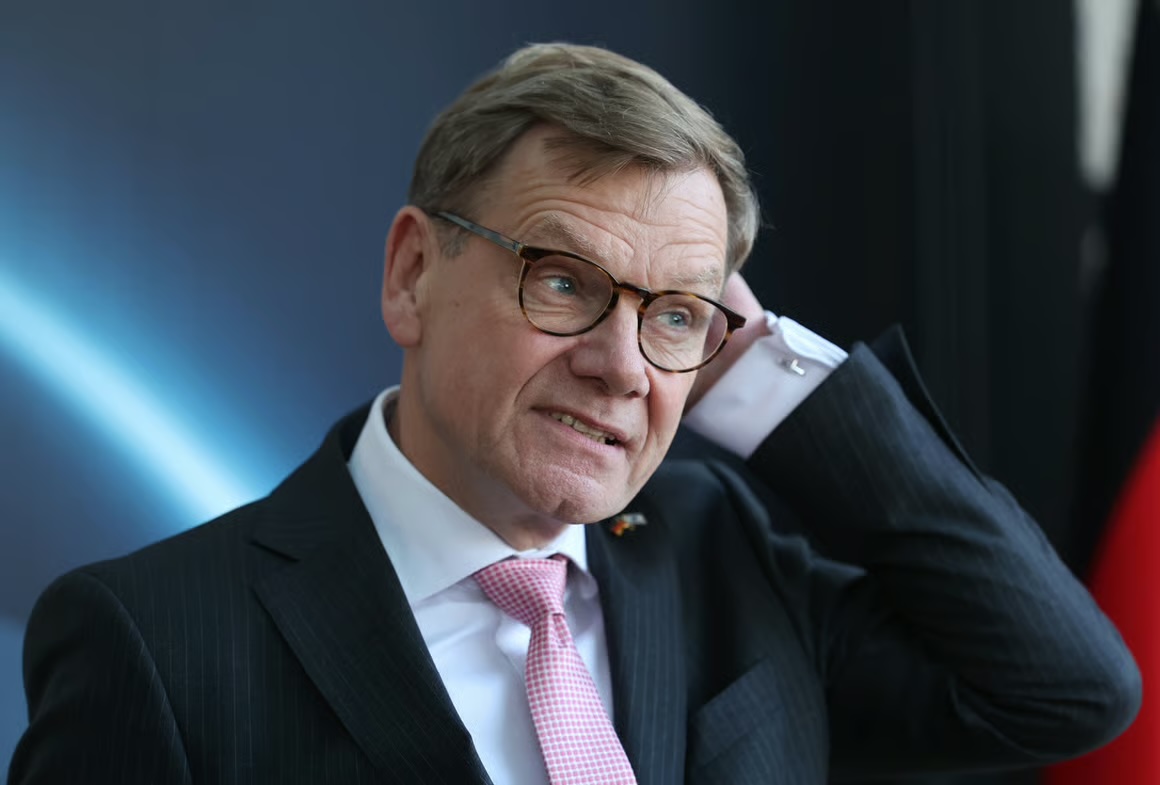
Reading his positions
Johann Wadephul's views have to be read in two registers. From 2017 or 2018 until May 2025 he was the CDU/CSU parliamentary group's lead on foreign and defence policy, for most of that time in opposition, free to press the government and to speak for his group. Since 6 May 2025 he has been Federal Foreign Minister, bound by cabinet discipline, a coalition agreement with the SPD and the chancellor's authority to set policy guidelines. A statement by the minister is often government policy; a statement by the opposition spokesman was not. Each entry below separates the two.
Every claim is drawn from official biographies, the Bundestag's archive or reputable media, and quotations are given only where the wording could be confirmed. Where his own view and the government's line diverge, or where his record in opposition sits uneasily with his conduct in office, the entry says so. Controversies are treated in more depth on the controversies page, and the government's record as a whole on the foreign policy page.
Defence and the Bundeswehr
A reserve officer's view of military strength and diplomacy.
Read the entry
Russia
- Position
Position Wadephul treats Russia as the principal military threat to Germany and Europe. In Johannesburg on 24 July 2026 he warned that "the Iskander missiles that Russia has deployed in Kaliningrad would need only a few minutes to reach Berlin." He has also argued that diplomacy with Moscow is still necessary: after meeting Sergey Lavrov in New York on 26 September 2026, he said, "You don't have to negotiate with friends; you have to negotiate with opponents."
- Context
Fact His views before 2022 were more conventional for the CDU of the Merkel era. In February 2021 he said of Nord Stream 2: "We are not fans of Nord Stream 2, but firstly it is an economic undertaking, not political and it is almost finished" (English rendering of an Estonian report, ERR). He was open to discussing conditions for its use at EU level.
- Development
Fact After the full-scale invasion of February 2022 his line hardened sharply. As minister, he and Interior Minister Alexander Dobrindt announced on 1 September 2026 that an attempted attack in Leipzig had been attributed to Russia. Measures included closing the Russian Consulate General in Bonn, terminating the lease of the Russian House in Berlin, proposing EU sanctions and summoning the Russian ambassador. Weeks later he held the first German–Russian foreign ministers' meeting since February 2022, on the sidelines of the UN General Assembly. He said the meeting had been requested by several countries and that talks about Ukraine must include Ukraine.
- Implications
Analysis The September 2026 measures were government decisions, taken jointly with the interior ministry. The Lavrov meeting was a German initiative and the clearest example of Wadephul combining deterrence with a channel of communication. It did not signal a softening: the two ministers remained at odds, and Wadephul blamed Russian influence in part for Germany's failed bid for a UN Security Council seat in June 2026.
- Criticism
Criticism Lavrov said he had learned nothing from the meeting and that Wadephul could have phoned. CDU MP Roderich Kiesewetter said Lavrov had "toyed with" him, and EU foreign policy chief Kaja Kallas said Lavrov's response showed Russia had no interest in peace. The SPD and the Greens welcomed the meeting. Analysis In hindsight, his 2021 remarks on Nord Stream 2 reflected a German consensus on Russian energy that collapsed in 2022.
Ukraine
- Position
Position Consistent, extensive military support for Ukraine. His view was summed up in a May 2022 interview headline: "Einen Aggressor ermutigt man mit Zögern" ("You encourage an aggressor by hesitating").
- Context
Fact In opposition he pressed the Scholz government on heavy weapons in 2022 and on Taurus cruise missiles in 2024, asking in the Bundestag on 22 February 2024 "what exactly the big problem with delivering the Taurus missiles is" (translated from German). In May 2023 he told Tagesspiegel there was "no justification at either the international legal or political level why Ukraine should not be allowed to attack targets in Russia" (as published in English).
- Development
Fact As minister he attended an informal meeting of EU foreign ministers in Lviv on 9 May 2025, made his first visit to Kyiv on 30 June 2025 with a defence-industry delegation, and on 22 August 2026 made an unannounced fourth visit that took him into eastern Ukraine for the first time. In 2026 President Zelensky awarded him the Ukrainian Order of Merit, second class, for consistent support of Ukraine.
- Implications
Analysis Ukraine policy in the Merz government is set principally by the chancellor, with the defence ministry responsible for deliveries. Wadephul's role has been diplomatic: visits, coordination with European partners and contacts with the US secretary of state, Marco Rubio, on ending the war. A detailed record of his personal part in the 2026 negotiations could not be verified.
- Criticism
Criticism In February 2025 Russian pranksters posing as aides to Zelensky recorded a call in which he said Ukraine would probably have to wait until about May for Taurus if the Union won the election. His office called it "a targeted disinformation campaign" and he filed a criminal complaint, but the episode raised questions about his caution. The second-class rank of his Ukrainian order was also reported to have drawn criticism in Germany, since Defence Minister Boris Pistorius had received the first class.
NATO and defence spending
- Position
Position Germany should meet NATO's spending targets because they are commitments to allies, not concessions to Washington. In May 2025 he backed the 5 per cent of GDP target proposed by President Trump: "Wir folgen ihm da" ("We follow him on that").
- Context
Fact In a Bundestag special session on 24 July 2019 he defended the 2 per cent target as a commitment to the alliance rather than to Trump, arguing (in the Bundestag's paraphrase) that only by keeping commitments would Germany be taken seriously. In 2022 the Union and the governing coalition agreed to anchor a €100 billion special fund for the Bundeswehr in the Basic Law and to reach 2 per cent "in multi-year average".
- Development
Fact At the NATO foreign ministers' meeting in Antalya on 15 May 2025 he endorsed the 5 per cent formula of NATO Secretary General Mark Rutte: 3.5 per cent for core defence and 1.5 per cent for related infrastructure. Allies adopted it at The Hague summit on 24–25 June 2025, and he called the agreement a "great success".
- Implications
Analysis The 5 per cent goal became government and alliance policy within six weeks, so his announcement anticipated rather than contradicted the outcome. The dispute was about who spoke for the government, and when. More on the alliance is on the NATO and transatlantic relations page.
- Criticism
Criticism The SPD's Ralf Stegner called the idea "glatter Irrsinn" (sheer madness); an SPD MP said it broke an agreement not to name a figure before the summit. Defence Minister Pistorius said the percentage was "not so important" and that the defence budget was his department's matter. The Greens called the statement "naive".
Defence and the Bundeswehr
- Position
Position Military strength and diplomacy are complementary. Before the Munich Security Conference in February 2026 he said: "Growing military strength and committed diplomacy are our most important security resources."
- Context
Fact Wadephul served as a temporary-career soldier in the Bundeswehr from 1982 to 1986 and holds the reserve rank of lieutenant colonel (Oberstleutnant d.R.), to which he was promoted in July 2023. From 2017 or 2018 to 2025 he was responsible for defence policy in the CDU/CSU group's leadership and sat as an alternate member of the Defence Committee.
- Development
Fact In August 2021, as Kabul fell, he defended the Bundeswehr's evacuation priorities and said he saw no justification for sending troops back to Afghanistan. As minister, he became a member of the National Security Council created by the cabinet on 27 August 2025 and chaired by the chancellor. His restructuring of the Foreign Office, announced in November 2025, created a new Security Policy department.
- Implications
Analysis The defence budget and the Bundeswehr are the responsibility of the defence ministry, held by the SPD in the Merz government. Wadephul's influence runs through the National Security Council, NATO diplomacy and arms-export decisions, which require the agreement of several ministries. His personal role in the 2022 special-fund negotiations could not be verified.
- Criticism
Criticism The sharpest friction has been over competence rather than substance: Pistorius's reply to the 5 per cent announcement in May 2025, that the defence budget was "my department", amounted to a public correction of the foreign minister by a coalition colleague.
European Union
- Position
Position Europe must take more responsibility for its own security. At the Munich Security Conference in February 2026, on a panel with Mark Rutte and Ursula von der Leyen, he said: "Now is Europe's moment."
- Context
Fact He sat on the Bundestag's EU Affairs Committee in his first term and as an alternate in the 19th and 20th, and his portfolio as deputy group chair included the EU's common foreign and security policy. German Wikipedia lists him as a member of Europa-Union Deutschland.
- Development
Fact On his first full day in office, 7 May 2025, he travelled with Merz to Paris and Warsaw, then joined an informal meeting of EU foreign ministers. On 29 September 2025 he met his French and Polish counterparts, Jean-Noël Barrot and Radosław Sikorski, in the Weimar Triangle format in Warsaw. In January 2026 Germany joined seven other European states in a statement of solidarity with Denmark and Greenland after the US threatened tariffs. His Foreign Office restructuring created a department for EU policy and geoeconomics.
- Implications
Analysis His European priorities align closely with the chancellor's emphasis on France and Poland. Much of the detailed EU work in the Merz government runs through the Chancellery, which limits how far European policy can be attributed to the foreign minister personally. See the European policy page.
- Criticism
Criticism No significant documented criticism of his European stance was found. Debate around the Foreign Office's European work has centred instead on the wider restructuring and budget cuts discussed under the UN entry below.
United States
- Position
Position A committed Atlanticist who argues that Germany keeps the US engaged by meeting its own obligations, while defending European interests when they clash with Washington's.
- Context
Fact His 2019 defence of the 2 per cent target was framed explicitly as a commitment to the alliance, not to the then US president. In Antalya in May 2025 he met Secretary of State Marco Rubio and backed Trump's 5 per cent demand; on 28 May 2025 he visited Rubio at the State Department.
- Development
Fact In January 2026, at the height of the dispute over US claims to Greenland, he held talks with Rubio in Washington and said of possible US military action: "I have no indication that this is being seriously considered." Days later President Trump threatened tariffs on eight European states, including Germany; the threat was withdrawn on 21 January. His Foreign Office restructuring created a separate Americas department.
- Implications
Analysis His approach mixes accommodation on burden-sharing with firmness on European sovereignty. In the Greenland episode Germany acted together with European partners rather than alone, which reflects the government's line as much as his own preference.
- Criticism
Criticism The Greens called his readiness to adopt the US-backed 5 per cent figure "naive". His statement on Greenland in January 2026 was overtaken within days by the US tariff threat.
China and the Indo-Pacific
- Position
Position China is a systemic challenger. In the Bundestag on 28 September 2023 he called its rise "the central epochal challenge of the 21st century" and said Beijing sought a "sinocentric world order" (translated from German).
- Context
Fact In that debate on the Scholz government's China strategy, he accused the coalition of "ideological blinders". Before his first Asia trip as minister, to Japan and Indonesia in August 2025, he condemned China's "increasingly aggressive conduct" in the Taiwan Strait and the East and South China Seas.
- Development
Fact Beijing's foreign ministry spokesperson warned on 18 August 2025 against "stoking confrontation". In October 2025 he postponed a planned visit to China because Beijing had confirmed only a meeting with Foreign Minister Wang Yi. The visit took place on 8–9 December 2025, when he met Wang Yi, Commerce Minister Wang Wentao and Vice President Han Zheng; topics included rare-earth export controls, Russia and Taiwan. He has also cultivated India, visiting Bengaluru and New Delhi in September 2025 and meeting Prime Minister Narendra Modi.
- Implications
Analysis His record shows a willingness to accept short-term friction with Beijing, combined with an effort to keep high-level channels open. Germany's economic dependence on China means the chancellor and the economics ministry weigh heavily in this field.
- Criticism
Criticism The most direct criticism came from Beijing, which rebuked his Taiwan remarks. The postponement in October 2025 showed the limits of that approach, although the December visit restored high-level contact.
Israel and the Middle East
- Position
Position Firm support for Israel's security, combined, since 2025, with insistence that Israel respect international humanitarian law in Gaza and rejection of annexation. In October 2024 he told the Bundestag: "We must stand firmly at Israel's side" (translated from German).
- Context
Fact He was the CDU/CSU's rapporteur for the Middle East, the Gulf and Iran from 2013 to 2017. In the October 2024 debate he argued that any "blockades" or "delays" of arms deliveries to Israel would breach a core German commitment.
- Development
Fact On his first visit as minister, on 10–11 May 2025, he said the humanitarian situation in Gaza "has become unbearable" (translated from German). In late May he rejected "Zwangssolidarität" (forced solidarity), and on 30 May he told Süddeutsche Zeitung that further arms deliveries would depend on a review of Israel's conduct. On 5 June he said recognising a Palestinian state now would send "the wrong signal"; on 31 July, he said recognition was "more likely to be the end of the process. But such a process must begin now," and demanded "clarity—also from Israel—that no policy of expulsion and no policy of active annexation is being pursued." He backed Merz's partial halt of arms exports usable in Gaza on 8 August 2025, which was lifted from 24 November 2025 after the ceasefire. In February 2026 he called UN Special Rapporteur Francesca Albanese "untenable" in her position.
- Implications
Analysis The arms-export halt was the chancellor's decision; Wadephul defended it as "very limited" and a necessary "political signal". The shift from his October 2024 speech reflects both the change from opposition to government and the worsening situation in Gaza.
- Criticism
Criticism CSU leader Markus Söder called his language too far-reaching; Josef Schuster, president of the Central Council of Jews in Germany, called the "forced solidarity" remark "eine Entgleisung" (a lapse). The August export halt was criticised by Israeli leaders, Jewish communities and parts of the Union. Albanese said her remarks had been misrepresented. See controversies.
Iran
- Position
Position Pressure on Iran through sanctions and diplomacy, but no German part in military action against it, and avoidance of regional chaos. On 5 March 2026 he said: "Germany is not participating in this war. And that will remain the case."
- Context
Fact Iran was part of his rapporteurship in the Bundestag's Foreign Affairs Committee from 2013 to 2017. As minister, after Israel's strikes on Iran in June 2025, he and his E3 and EU counterparts met Iran's foreign minister Abbas Araghchi in Geneva on 20 June 2025.
- Development
Fact On 28 August 2025 the foreign ministers of France, the United Kingdom and Germany triggered the UN "snapback" mechanism to restore sanctions on Iran. After US and Israeli strikes began on 28 February 2026, he ruled out German participation and regime-change operations, then toured Cyprus, Israel and Saudi Arabia. In Israel on 10 March he said: "We do not want to see chaos in this country, because it could lead to further escalation in this region" (translated from German).
- Implications
Analysis His Iran policy is collective: the snapback was an E3 decision, and the non-participation line reflects the government as a whole. It shows a preference for pressure through sanctions and diplomacy over military means.
- Criticism
Criticism No significant documented criticism of his personal handling of Iran policy was found in the sources consulted.
Syria and returns
- Position
Position Engagement with Syria's new authorities and humanitarian support, with a sober view of conditions for refugees' return. Returns, he said after visiting Syria, are possible only to a very limited extent in the short term.
- Context
Fact On 30 October 2025 he met interim President Ahmed al-Sharaa and Foreign Minister Asaad al-Shaibani in Damascus, toured the destroyed suburb of Harasta and pledged up to €52.6 million in humanitarian aid for Syria, Lebanon and Jordan. Returns to Syria were a central demand of the CDU and CSU in the 2025 election campaign.
- Development
Fact After criticism from his own party, he clarified that his ministry "actively and constructively" supported the return of offenders and people posing security risks. On 20 November 2025 he stood by his assessment: "Man darf doch die Empathie und den Blick für die Wirklichkeit nicht verlieren" ("One must not lose empathy and a sense of reality").
- Implications
Analysis This is the clearest case of the foreign minister's assessment diverging from his own party's domestic agenda. Merz defended him personally but kept the government's returns policy unchanged.
- Criticism
Criticism CDU/CSU deputy group leader Günter Krings called his argument "entirely inappropriate"; CSU general secretary Martin Huber said the war was over; the Hesse Junge Union chair suggested he consider whether he was still the right person. From the other side, Left Party leader Heidi Reichinnek called the Union's criticism of him "schäbig" (shabby).
UN and multilateralism
- Position
Position Germany should take a larger role in the United Nations, and the Security Council should be reformed. In his General Assembly speech on 27 September 2025 he campaigned for a non-permanent seat for 2027–28.
- Context
Fact His earlier international parliamentary work was in the Council of Europe's Parliamentary Assembly and the NATO Parliamentary Assembly rather than in UN bodies.
- Development
Fact On 3 June 2026 Germany lost the Security Council election, with 104 votes against 134 for Portugal and 131 for Austria: the first time a German bid had failed. He pointed to Germany's positions on Ukraine and Israel: "These are positions that not all member states share." He was also reported to have accused Russia of stirring up sentiment against Germany.
- Implications
Analysis The defeat was a setback for the government as a whole, not only for the minister, and, by his own account, it reflected the fact that Germany's positions on Ukraine and Israel are not shared by many member states. His visits to India, South Africa, Morocco, Tunisia and Algeria in 2025–26 can be read in part as an effort to widen Germany's partnerships.
- Criticism
Criticism The Greens and the Left criticised repeated cuts to humanitarian aid and the dissolution of the Foreign Office's Stabilisation Department, announced in November 2025, which critics saw as weakening Germany's multilateral profile.
A rare domestic marker
Fact Wadephul's documented positions are overwhelmingly on foreign and security policy. One notable exception is the free vote of 30 June 2017 on opening marriage to same-sex couples, when, according to German and English Wikipedia, he voted in favour, against the majority of the CDU/CSU group. His party career is set out on the CDU/CSU career page.
Sources
- ERR: Wadephul on Nord Stream 2, February 2021
- European Pravda: Iskander warning, July 2026
- Federal Foreign Office: measures after the Leipzig attack attempt
- dpa via bluewin: Wadephul and Lavrov remain at odds
- Rhein-Neckar-Zeitung: interview, May 2022
- Espreso: Wadephul on strikes against targets in Russia, May 2023
- t-online: Russian prank call, February 2025
- ZDF heute: Wadephul and the 5 per cent target
- Federal Foreign Office: statement before the Munich Security Conference 2026
- dpa via bluewin: Greenland remarks, January 2026
- Bundestag text archive: China strategy debate
- t-online: China criticises Wadephul
- Euronews: Germany and Israel's international isolation
- Jüdische Allgemeine: Schuster on Wadephul's remark
- Anadolu: Germany will not join Iran war
- ZDF heute: Wadephul stands by Syria assessment
- Ara: Germany and the UN Security Council election