Major Political Issues
Twelve files that have defined Johann Wadephul's time as Foreign Minister — what happened, when, what he did and what followed — with links to the detailed chapters.
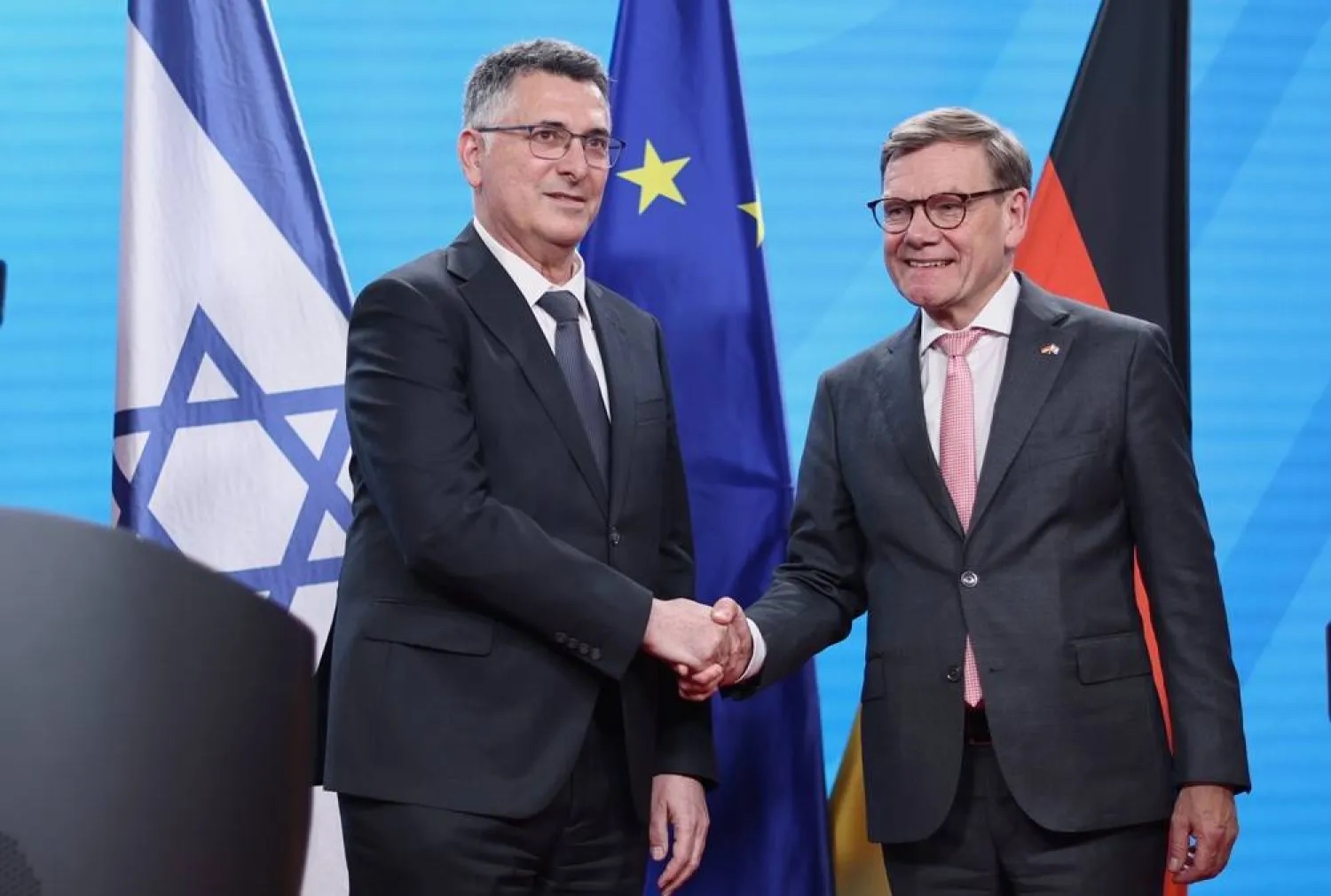
Since 6 May 2025 Johann Wadephul has led the Federal Foreign Office through a period of overlapping crises: Russia's war against Ukraine in its fourth and fifth years, war in Gaza and then between Israel, the United States and Iran, a more transactional American administration and growing pressure on the international institutions Germany has long relied upon. This page is an index rather than a narrative. Each entry summarises one issue in four parts — what happened, when, his role and the consequences — and points to the chapter where it is discussed in depth.
Throughout, his own documented positions are distinguished from decisions of the government as a whole. Where a source could not confirm his personal role, the entry says so.
Issues at a glance
Ukraine
What: continued political, military and humanitarian support for Ukraine against Russia's invasion. When: throughout his tenure, building on opposition years in which he pressed the Scholz government on heavy weapons and the Taurus missile. His role: he joined EU ministers in Lviv on 9 May 2025, made his first Kyiv visit as minister on 30 June 2025 with a defence-industry delegation, and returned unannounced on 22 August 2026, travelling deep into eastern Ukraine. He held calls with Marco Rubio on ending the war. Consequence: Ukraine awarded him its Order of Merit, second class, in 2026. He insists that there can be no talks about Ukraine without Ukraine.
Defence & securityRussia
What: deterrence, sanctions and a response to hybrid attacks. When: sharpest in 2026. His role: in July he warned in Johannesburg that Iskander missiles in Kaliningrad could reach Berlin in minutes. On 1 September 2026, with Interior Minister Dobrindt, he attributed an attempted attack in Leipzig to Russia and announced the closure of the Russian Consulate General in Bonn, among other measures. On 26 September he met Sergey Lavrov in New York — the first such meeting since February 2022. Consequence: no breakthrough; Lavrov dismissed the talks. The SPD and Greens welcomed the contact; CDU MP Roderich Kiesewetter was critical.
International relationsNATO & defence spending
What: the move from NATO's 2% guideline to a 5% target. When: May–June 2025. His role: at the NATO foreign ministers' meeting in Antalya on 15 May 2025 he backed President Trump's demand for 5% of GDP ("Wir folgen ihm da"), before the coalition had agreed a figure. Consequence: sharp criticism from the SPD, including Ralf Stegner's "glatter Irrsinn", and a Green charge of naivety. At The Hague on 24–25 June 2025 all allies adopted the target: 3.5% for core defence and up to 1.5% for related spending by 2035.
NATO & transatlantic relationsIsrael & Gaza
What: balancing Germany's commitment to Israel's security with concern over the humanitarian situation in Gaza. When: May 2025 onwards. His role: on his first visit in May 2025 he called the situation in Gaza unbearable. Later that month he rejected "Zwangssolidarität" (forced solidarity) and tied further arms exports to a review of compliance with international humanitarian law. He backed the Chancellor's partial halt on exports of arms usable in Gaza in August 2025. Consequence: criticism from CSU leader Söder and the Central Council of Jews; the curbs were lifted from 24 November 2025 after the October ceasefire.
ControversiesIran
What: Iran's nuclear programme and two wars. When: June 2025 and from 28 February 2026. His role: during the Israel–Iran war in June 2025 he met Iran's Foreign Minister Araghchi in Geneva with his E3 and EU colleagues. On 28 August 2025 the E3 ministers triggered the UN "snapback" of sanctions. When the US and Israel struck Iran in 2026, he said Germany was not participating and would not join regime-change operations, then toured Cyprus, Israel and Saudi Arabia. Consequence: Germany kept its distance from the military campaign while remaining in close contact with the parties.
Foreign policySyria & returns
What: relations with Syria's new authorities and the return of Syrian refugees. When: 30 October 2025 onwards. His role: in Damascus he met interim President Ahmed al-Sharaa, pledged up to €52.6m in humanitarian aid for Syria, Lebanon and Jordan, and said after visiting destroyed Harasta that returns were possible only to a very limited extent in the short term. Consequence: a heated dispute inside the CDU/CSU, in which some colleagues accused him of undermining returns policy. Chancellor Merz defended him while leaving the policy unchanged; Wadephul later stood by his assessment as a sober analysis.
ControversiesChina & Taiwan
What: managing Germany's largest trading relationship amid strategic rivalry. When: August–December 2025. His role: before his first Asia trip in August 2025 he criticised China's "increasingly aggressive conduct" in the Taiwan Strait and the East and South China Seas; Beijing warned against "stoking confrontation". He postponed an October visit when only a meeting with Wang Yi was confirmed. Consequence: he travelled to Beijing on 8–9 December 2025, meeting Wang Yi, Commerce Minister Wang Wentao and Vice President Han Zheng, with rare-earth export controls, Russia and Taiwan on the agenda.
International relationsTransatlantic relations & Greenland
What: keeping the United States engaged in European security under the second Trump administration. When: from May 2025; acute in January 2026. His role: he met Secretary of State Rubio in Antalya and at the State Department on 28 May 2025, and returned to Washington around 12–13 January 2026 as the dispute over Greenland escalated, saying he had "no indication" US military action was seriously considered. Consequence: a US tariff threat against eight European states, Germany included, followed days later and was withdrawn on 21 January after a joint European statement of solidarity with Denmark.
NATO & transatlantic relationsEuropean Union
What: a more capable European foreign and security policy. When: from his first day in office. His role: on 7 May 2025 he travelled with Merz to Paris and Warsaw and joined EU foreign ministers there; he has worked closely with France and Poland in the Weimar Triangle, including in Warsaw on 29 September 2025. At the Munich Security Conference in February 2026 he said "Now is Europe's moment". Consequence: a Foreign Office reorganised from summer 2026 with a department for EU policy and geoeconomics.
European policyUnited Nations & the UNSC bid
What: Germany's candidacy for a non-permanent seat on the Security Council for 2027–28. When: campaign launched in his General Assembly speech of 27 September 2025; vote on 3 June 2026. His role: he led the campaign and called for Security Council reform. Consequence: Germany lost for the first time in its history, with 104 votes against 134 for Portugal and 131 for Austria. He pointed to Germany's positions on Ukraine and Israel — "positions that not all member states share" — and reportedly accused Russia of stirring up sentiment against Germany.
International engagementHuman rights & international law
What: how Germany applies international law and supports UN mechanisms and humanitarian work. When: 2025–2026. His role: on 12 February 2026 he condemned remarks by UN Special Rapporteur Francesca Albanese about Israel and called her "untenable" in her position; France and Czechia made similar demands. Albanese said her words had been misrepresented. Meanwhile repeated cuts to humanitarian aid in the Foreign Office budget drew criticism from the Greens and the Left. Consequence: a debate over consistency — between advocacy of a rules-based order and the means devoted to it.
ControversiesForeign Office reform & budget
What: a restructuring of the ministry under budget pressure. When: announced 26 November 2025, effective summer 2026. His role: as minister he set out the plan: about 570 posts cut by 2029, mostly at headquarters; the Stabilisation Department dissolved; new departments for security policy, EU policy and geoeconomics, and the Americas. Consequence: supporters see a ministry refocused on security and economic statecraft; critics argue that civilian crisis prevention and humanitarian capacity are being weakened.
German foreign policy
Patterns across the files
Analysis Read together, the twelve entries show several recurring features of Wadephul's tenure. The first is a willingness to state positions early and plainly — on the 5% target in Antalya, on China's conduct in the Taiwan Strait, on the destruction in Syria. Each time the directness brought friction, whether with the coalition partner, with Beijing or with his own parliamentary group. Each time he largely held his ground, and in two of the three cases events moved in his direction: NATO adopted the 5% target, and his China visit eventually took place with a broader programme than first offered.
The second is the interaction between files. Germany's loss in the Security Council election of June 2026 cannot be separated from its positions on Ukraine and the Middle East, as Wadephul himself acknowledged. Russia's hybrid activity in Germany and its diplomatic campaigning at the UN belong, in his account, to the same challenge. The Greenland dispute, meanwhile, showed how quickly transatlantic security questions can turn into trade threats.
The third is the gap between ambition and resources. A minister who argues for a stronger German role in the world has presided over cuts to his own ministry's staff and to humanitarian budgets. That tension is not of his making alone — the budget is a government decision — but it shapes how his record is judged by critics.
The Middle East: the most contested file
Fact No area has generated more debate about Wadephul than the Middle East. He came to office with a long record on the region: in the 18th Bundestag he was the CDU/CSU's rapporteur on the Middle East, the Gulf and Iran in the Foreign Affairs Committee, and in opposition in October 2024 he told the Bundestag that Germany "must stand firmly at Israel's side" (translated from German) and warned against any delays in arms deliveries.
In office, his emphasis shifted as the humanitarian situation in Gaza deteriorated. Within weeks he was describing conditions as unbearable, rejecting "forced solidarity" and saying further arms exports would depend on a review of Israel's conduct under international humanitarian law. On 5 June 2025, hosting Gideon Sa'ar in Berlin, he said recognising a Palestinian state at that point would send "the wrong signal", while rejecting new settlements and confirming continued arms support. By 31 July 2025 he was saying that recognition was "more likely to be the end of the process. But such a process must begin now", and warning Israel of growing international isolation.
Criticism The shifts drew criticism from several directions. CSU leader Markus Söder called his language too far-reaching; the president of the Central Council of Jews in Germany, Josef Schuster, described one remark as a lapse; parts of the Union opposed the August 2025 partial export halt, as did Israeli leaders. From the other side, critics of German policy argued that the measures came late and were too limited. His February 2026 call for Francesca Albanese to go was welcomed by Israel's supporters and criticised by those who saw it as pressure on an independent UN mandate.
Analysis The arc of his statements reflects the constraints of the office: a German foreign minister is bound by the doctrine that Israel's security is part of Germany's reason of state, and also by the obligations of international law. Wadephul's record shows him trying to hold both, adjusting emphasis as events changed — a balance that left few constituencies fully satisfied. The individual episodes are documented in controversies.
Running the ministry
Fact Behind the crises sits a less visible issue: the shape of the Foreign Office itself. The restructuring announced on 26 November 2025 is a significant organisational change for the ministry. It cuts around 570 posts by 2029, dissolves the Stabilisation Department, and adds three departments that mirror the government's priorities: security policy, EU policy and geoeconomics, and the Americas.
Analysis Supporters read the reform as an overdue adaptation to a world in which economic coercion, alliance management and security policy dominate diplomacy. Critics, including the Greens and the Left, point to the coincidence of the reform with repeated reductions in humanitarian aid and argue that it narrows Germany's civilian toolbox. The creation in August 2025 of a National Security Council chaired by the Chancellor adds another layer: it may strengthen coordination across government, but also moves part of strategic decision-making closer to the Chancellery. How these changes affect the Foreign Office's weight in practice is still emerging.
Russia and Ukraine: from demands to diplomacy
Fact The Russia–Ukraine file shows most clearly how the move from opposition to government changed Wadephul's instruments. In opposition he set out maximal demands: in April 2022 he called on Chancellor Scholz to "deliver" heavy weapons, and in February 2024 he asked in the Bundestag what exactly the problem was with supplying Taurus missiles. As minister he has worked through visits, alliance coordination and, in September 2026, a package of diplomatic countermeasures after the attempted attack in Leipzig.
The same month brought the most debated step of his tenure towards Moscow: the meeting with Sergey Lavrov on the sidelines of the UN General Assembly on 26 September 2026. Wadephul justified it in a sentence — "You don't have to negotiate with friends; you have to negotiate with opponents" — and stressed that Ukraine must be part of any talks about its future.
Criticism Lavrov said afterwards that he had learned nothing from the conversation and suggested that Wadephul could simply have phoned. EU foreign policy chief Kaja Kallas said Lavrov's reaction showed that Russia had no interest in peace, while CDU MP Roderich Kiesewetter argued that Lavrov had toyed with the German minister. The SPD and the Greens welcomed the contact as an important step. Analysis Whether the meeting proves a useful channel or an exposed gesture will depend on what, if anything, follows it.
Sources
- Federal Foreign Office — first visit to Israel and the Palestinian territories, May 2025
- ZDF heute — Wadephul and the 5% target
- Algemeiner — arms deliveries and the Gaza review
- The Local — recognition "the wrong signal", June 2025
- Anadolu — recognition process must begin now
- Al Jazeera — Germany lifts curbs on arms exports to Israel
- UK Government — E3 statement on snapback
- Anadolu — Germany will not join Iran war
- ZDF heute — Syria criticism and Merz's response
- t-online — China criticises Wadephul
- Table.Media — Wadephul in Beijing
- bluewin / dpa — Greenland, January 2026
- The News — UN Security Council election, June 2026
- Jüdische Allgemeine — Wadephul on Francesca Albanese
- Berliner Zeitung — Foreign Office restructuring
- Federal Foreign Office — response to the Leipzig attack attempt
- bluewin / dpa — Wadephul and Lavrov in New York
- Evrensel — German reactions to the Lavrov meeting