Six decades, dated
From a birth certificate in Husum to the Federal Foreign Office in Berlin: the life and career of Johann Wadephul, set out entry by entry, with every date checked against official biographies and contemporary reporting.
Ten eras, one record
Johann Wadephul's career moved slowly and then very quickly. For almost four decades it followed the familiar path of a West German Christian Democrat: school in the provinces, military service, law at Kiel, the youth wing of the party, the state parliament and finally the Bundestag. Then, in May 2025, he became Germany's Federal Foreign Minister, and the pace of the record changes completely. The final section of this timeline covers seventeen months; the first covers almost twenty years.
The entries below are grouped into ten eras. They run broadly in order, but the middle eras overlap: from 2017 Wadephul was simultaneously a parliamentary manager, the opposition's chief foreign-policy spokesman and a voice on defence, so those strands are shown as separate threads rather than forced into a single sequence. Each entry links to the page of this profile where the episode is discussed in depth.
Where official sources disagree, the timeline says so. His Abitur is dated 1981 in the Bundestag and federal government CVs and 1982 elsewhere; his admission to the bar is given as 1995 officially and 1996 in other accounts; and his election as deputy chair of the CDU/CSU parliamentary group is dated to 2017 by some sources and 2018 by others. In each case the official date is shown first.
- I – II
- Early life and education, 1963–1996: Husum, Dithmarschen, the Bundeswehr and the University of Kiel.
- III – IV
- Professional career and political beginnings: a lawyer in Lübeck and Neumünster; the Junge Union, the state CDU and the Landtag in Kiel.
- V – VI
- Bundestag and parliamentary leadership, 2009–2025: Rendsburg-Eckernförde, committee work and the deputy chairmanship of the CDU/CSU group.
- VII – IX
- Foreign policy, defence and parliamentary diplomacy: the opposition years and the war in Ukraine.
- X
- Federal Foreign Minister, May 2025 to the present.
From Husum to the opposition front bench
Childhood, law, the state party in Schleswig-Holstein and sixteen years in the Bundestag before office.
- I · Early life
Born in Husum
Johann David Wadephul is born in Husum, on Schleswig-Holstein's North Sea coast. He is Protestant, and today married with three children.
Early lifeAbitur in Meldorf
After primary school in Nordhastedt, he completes his Abitur at the Meldorfer Gelehrtenschule in Dithmarschen. The Bundestag and federal government CVs give 1981; some other sources say 1982.
EducationFour years in the Bundeswehr
He serves as a temporary-career soldier (Zeitsoldat). Much later, in July 2023, he is promoted to lieutenant colonel of the reserve.
Military service- II · Education
Law at Kiel
He studies law at Christian-Albrechts-Universität zu Kiel and passes the first state examination in 1991; a Konrad-Adenauer-Stiftung scholarship follows in 1992–1993.
University yearsTraineeship in Kiel
He completes his Referendariat at the Kiel regional court and passes the second state examination in 1995.
Legal trainingDoctorate in law
The University of Kiel awards him a doctorate (Dr. jur.) for a dissertation in labour law on agreements between employers and works councils.
The doctorate- III · Professional career
Practice in Lübeck
Admitted to the bar in 1995 (official CVs; one account says 1996), he works at a law firm in Lübeck alongside a growing role in the state party.
The legal careerOwn practice in Neumünster
He becomes a self-employed lawyer in Neumünster, the professional base he keeps through his parliamentary career.
The legal careerSpecialist qualifications
He qualifies as a specialist lawyer (Fachanwalt) in both medical law and social law.
Biography- IV · Political beginnings
Joins the CDU
At nineteen he joins the Christian Democratic Union and its youth organisation, the Junge Union.
Political beginningsJunge Union posts
He sits on the Junge Union's Schleswig-Holstein board and chairs its Dithmarschen district branch (1985–1989, according to Wikipedia).
In the Junge UnionState chair of the Junge Union
He leads the Junge Union in Schleswig-Holstein, and from 1993 also sits on the state CDU board.
Political beginningsGeneral secretary in Kiel
He becomes state party manager in April 1997 and general secretary of the CDU Schleswig-Holstein later that year.
CDU careerElected to the Landtag
He wins a seat in the Schleswig-Holstein state parliament on the CDU's state list, and is re-elected in February 2005.
The Landtag yearsState party chair
He leads the CDU in Schleswig-Holstein; Peter Harry Carstensen later succeeds him in the post.
State chairLeader of the CDU group
Weeks after becoming deputy chair, he takes over the CDU group in the Landtag, the senior partner in Carstensen's grand coalition with the SPD.
Group leader in KielCoalition collapse in Kiel
In July Carstensen ends the grand coalition, forcing an early state election on 27 September. Wadephul does not stand again for the Landtag.
The end of the Kiel chapter- V · Bundestag
Into the Bundestag
On the same day as the state election, he wins the Rendsburg-Eckernförde constituency (no. 4) with 40.2 per cent of first votes. He holds it again in 2013 and in 2017 (42.7 per cent).
BundestagFederal party board
He is elected to the CDU's federal executive board, serving until 2020 or 2021 (the 2020 party congress was postponed to January 2021).
CDU careerRe-elected, turning outward
Re-elected with 45.2 per cent, he chairs the Election Scrutiny, Immunity and Rules committee and becomes Foreign Affairs Committee rapporteur for the Middle East, the Gulf and Iran.
Committee recordLeader of the state delegation
He is elected chair of the Schleswig-Holstein CDU group of Bundestag members, succeeding Ole Schröder.
BundestagMarriage vote
Fact He votes in favour of opening marriage to same-sex couples, against the majority of his parliamentary group.
Political positionsSeat lost, place kept
He narrowly loses the constituency to Sönke Rix of the SPD (29.7 against 30.8 per cent) and returns via the CDU state list.
Bundestag- VI · Parliamentary leadership
Deputy group chair
He becomes deputy chair of the CDU/CSU parliamentary group for foreign affairs, defence, EU security policy and the Council of Europe. Sources differ on the year; the official CVs give 2018.
Deputy chairConfirmed in opposition
With the Union now in opposition, he is confirmed as deputy chair under group leader Friedrich Merz, keeping the foreign and defence brief.
Parliamentary work- VII · Foreign policy in opposition
Nord Stream 2
Position He calls the pipeline an economic project that is “almost finished” and is open to discussing conditions for its use at EU level.
PositionsChina debate
Position In the Bundestag he calls China's rise “the central epochal challenge of the 21st century” and accuses the coalition of “ideological blinders”.
China and AsiaIsrael and arms deliveries
Position He argues that blocking or delaying arms deliveries to Israel would breach a core German commitment.
Middle EastThe prank call
Criticism Russian pranksters posing as Ukrainian officials publish a recorded call about Taurus. His office calls it disinformation and he files a criminal complaint.
Controversies- VIII · Defence and security
Defending the 2% target
Position In a special Bundestag session he presents NATO's 2% spending goal as a commitment to the alliance, not to President Trump.
NATOKabul evacuation
He confirms that the first Bundeswehr evacuation flight from Kabul carried only seven people, explaining that bringing in troops had priority.
Defence and securityPressing Scholz on weapons
Criticism He demands that Chancellor Scholz “deliver” heavy weapons to Ukraine and calls him partly responsible for Ukraine's defencelessness.
UkraineStrikes on Russian territory
Position He tells Tagesspiegel there is no legal or political reason to stop Ukraine using German weapons against targets in Russia.
Defence and securityThe Taurus question
Ten years after Russia's war began, he asks the chancellor in the Bundestag what “the big problem” with delivering Taurus missiles is. Union motions fail that year.
Speeches- IX · International engagement
Council of Europe
He joins the German delegation to the Parliamentary Assembly of the Council of Europe, later serving as an alternate member.
International engagementNATO Parliamentary Assembly
In the 20th Bundestag he heads the German delegation to the NATO Parliamentary Assembly.
Transatlantic ties
From critic to minister
The handover from part one to part two takes a little over ten weeks. On 23 February 2025 Wadephul wins back Rendsburg-Eckernförde; on 6 May he is sworn in. A man who had spent years criticising government policy from the opposition benches now has to make it, and many of the positions he took in opposition, on Ukraine, on Israel and on defence spending, are tested almost immediately.
Israel is a good example. As an opposition MP in October 2024 he insisted that Germany must stand firmly at Israel's side. As minister, by the summer of 2025, he was tying further arms exports to a review of conduct in Gaza and warning publicly against annexation.
We need clarity—also from Israel—that no policy of expulsion and no policy of active annexation is being pursued.
Federal Foreign Minister
Seventeen months at the Auswärtiges Amt, from the first trip to Paris to the meeting with Sergey Lavrov in New York.
- X · Current role
Constituency regained
In the snap federal election he wins Rendsburg-Eckernförde back with 32.8 per cent of first votes.
BundestagSworn in as Foreign Minister
He joins Friedrich Merz's cabinet, the first CDU foreign minister since Gerhard Schröder left the office in 1966. He keeps his Bundestag seat.
German foreign policyFirst visit to Israel
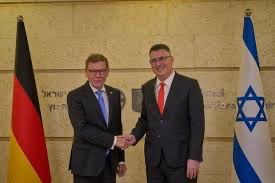
He meets Netanyahu and Sa'ar, lays a wreath at Yad Vashem, meets the Palestinian prime minister and calls Gaza's humanitarian situation unbearable.
Middle EastBacking 5% in Antalya
Criticism At NATO talks he backs a 5% of GDP defence target before the coalition has agreed one; SPD and Green politicians object. The Hague summit adopts the target on 24–25 June.
NATO“Forced solidarity”
Criticism He rejects “Zwangssolidarität” with Israel and links further arms exports to a humanitarian-law review, drawing criticism from Markus Söder and the Central Council of Jews.
ControversiesFirst Kyiv visit
He arrives by night train with a defence-industry delegation for his first visit to Ukraine as minister.
UkrainePartial arms halt
He defends Merz's halt on exports of weapons usable in Gaza as “very limited”. The curbs are lifted from 24 November.
ControversiesJapan, Indonesia, and Beijing's rebuke
Before his first Asia trip he condemns China's “increasingly aggressive” conduct around Taiwan; Beijing warns against “stoking confrontation”.
ChinaIndia visit
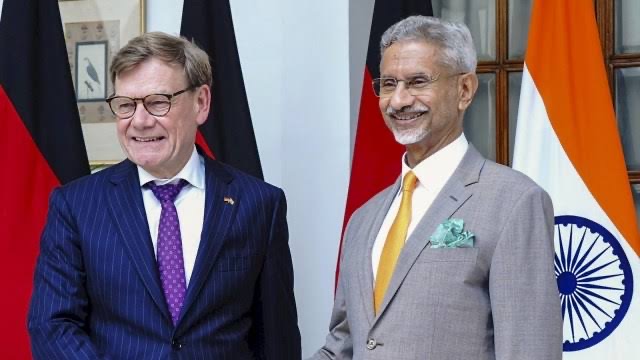
After Bengaluru he holds talks with Jaishankar at Hyderabad House and calls on Prime Minister Narendra Modi in New Delhi.
VisitsUN General Assembly
He addresses the General Debate, campaigning for a German Security Council seat for 2027–28 and for Council reform.
SpeechesAnkara
He holds talks with Hakan Fidan and says Eurofighter deliveries to Türkiye could happen within the year once an agreement is signed.
TürkiyeDamascus and the returns row
Criticism After touring destroyed Harasta he says returns to Syria are only very limitedly possible for now, provoking criticism within his own party.
ControversiesRestructuring the Foreign Office
He announces about 570 posts cut by 2029 and new departments for security policy, EU policy and geoeconomics, and the Americas.
The ministryBeijing
After postponing an October trip, he meets Wang Yi and Vice President Han Zheng; rare earths, Russia and Taiwan dominate.
ChinaGreenland tensions
In Washington, at the height of the Greenland dispute, he says he has no indication US military action is being seriously considered.
Transatlantic relationsUkrainian Order of Merit
President Zelensky awards him the Order of Merit, second class, as reported in late February; the class itself draws comment in Germany.
RecognitionIran war crisis tour
Stating that Germany is not taking part in the US–Israeli war on Iran, he travels to Cyprus, Israel (10 March) and Riyadh (11 March).
Middle EastRabat
In a strategic dialogue with Nasser Bourita, Germany calls Morocco's Western Sahara autonomy plan a “serious and credible basis”.
VisitsSecurity Council defeat
Fact Germany loses a UN Security Council election for the first time, with 104 votes against Portugal's 134 and Austria's 131.
ControversiesSouth Africa
Hosted by Ronald Lamola in Pretoria, he warns in Johannesburg that Russian Iskander missiles in Kaliningrad could reach Berlin within minutes.
VisitsFourth Ukraine visit
An unannounced visit to Kyiv includes his first trip deep into eastern Ukraine.
UkraineResponse to Leipzig
With Interior Minister Dobrindt he attributes an attempted attack in Leipzig to Russia and announces the closure of the Russian consulate general in Bonn.
Security policyOttawa
He breaks off from the UN General Assembly to mark 75 years of German–Canadian relations with Foreign Minister Anita Anand.
VisitsMeeting Lavrov
Criticism He meets Sergey Lavrov in New York, the first such meeting since February 2022. Lavrov dismisses the talks; critics and supporters divide in Berlin.
Controversies
Key dates
- Born
- 10 February 1963, Husum, Schleswig-Holstein
- Abitur
- 1981, Meldorfer Gelehrtenschule (1982 in some sources)
- Bundeswehr
- 1982–1986; lieutenant colonel of the reserve since July 2023
- Doctorate
- 1996, University of Kiel (Dr. jur.)
- CDU member
- Since 1982; state chair in Schleswig-Holstein 2000–2002
- Landtag
- 2000–2009; CDU group chair from 27 April 2005
- Bundestag
- Since 2009, Rendsburg-Eckernförde (via state list 2021–2025)
- Deputy group chair
- 2017 or 2018 (sources differ) to 2025
- Foreign Minister
- Since 6 May 2025, cabinet of Friedrich Merz
Sources
- Deutscher Bundestag — biography, 21st electoral term
- Federal Foreign Office — CV of the Federal Minister
- Federal Government — cabinet CV
- Konrad-Adenauer-Stiftung — Geschichte der CDU biogram
- Wikipedia (German) — Johann Wadephul
- Deutscher Bundestag — Ukraine debate, 22 February 2024
- t-online — criticism of Scholz in the weapons debate, April 2022
- ZDF heute — the 5% defence target, May 2025
- Euronews — Israel visit, August 2025
- Federal Foreign Office — India visit, September 2025
- Berliner Zeitung — Foreign Office restructuring, November 2025
- The News — UN Security Council election, June 2026
- Federal Foreign Office — measures after the Leipzig attack attempt, September 2026
- dpa via bluewin — the Lavrov meeting, September 2026