Bundestag Career
Since 2009 Johann Wadephul has represented Rendsburg-Eckernförde in the German Bundestag. Over five terms he moved from social policy and procedure to the front bench of the CDU/CSU's foreign and defence policy, and he kept his seat when he became Foreign Minister.
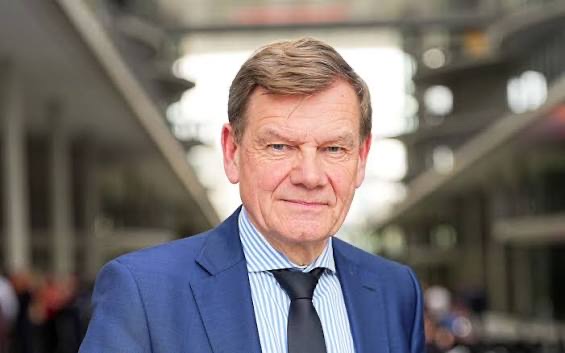
When Johann Wadephul arrived in the Bundestag in the autumn of 2009, he was a forty-six-year-old lawyer who had just spent nine years in the state parliament in Kiel and had led the CDU group there. Few would have marked him out as a future foreign minister. His first committees dealt with labour, social affairs and European questions. Sixteen years later he was sworn in at the head of the Federal Foreign Office while still sitting as the directly elected member for his rural constituency between Kiel and Rendsburg. This page traces that parliamentary career term by term.
- 2009
- First elected to the Bundestag
- 5
- Consecutive elections to the Bundestag
- 4
- Direct constituency wins (2009, 2013, 2017, 2025)
- 45.2%
- Best first-vote share, 2013
The constituency: Rendsburg-Eckernförde
Fact Wadephul sits for constituency 004, Rendsburg-Eckernförde, in Schleswig-Holstein. In Germany's mixed electoral system each voter casts two votes: a first vote (Erststimme) for a constituency candidate and a second vote (Zweitstimme) for a party list. Wadephul won the constituency outright in four of his five elections. The one exception was 2021, when he narrowly lost to the SPD's Sönke Rix and returned to parliament at the top of the CDU's Schleswig-Holstein list.
The figures below are his first-vote shares as reported in German and English Wikipedia. They have been checked against the constituency results published by the Federal Returning Officer (Bundeswahlleiterin), which give the same values.
| Election | Wadephul (CDU) | SPD candidate | Mandate |
|---|---|---|---|
| 27 Sep 2009 | 40.2% | 32.5% | Direct |
| 22 Sep 2013 | 45.2% | 36.8% | Direct |
| 24 Sep 2017 | 42.7% | 28.9% | Direct |
| 26 Sep 2021 | 29.7% | 30.8% (Sönke Rix, elected) | State list (first place, per German Wikipedia) |
| 23 Feb 2025 | 32.8% | 21.2% (Felix Wilsberg) | Direct |
Five terms, term by term
Each legislative period is set out below with his committee work, his roles in the CDU/CSU group and the debates that defined it. Committee details come from his official Bundestag biographies and, for the earlier terms, from Wikipedia; the parliamentary work page sets them out in a single table.
-
17th2009–2013
A social-policy lawyer finds Europe
Fact Elected directly on 27 September 2009 with 40.2 per cent of first votes, on the same day as an early state election in Schleswig-Holstein in which he did not stand again. He sat on the Committee on Labour and Social Affairs, a natural home for a specialist in social and medical law, and on the Committee on the Affairs of the European Union. From 2010 he was a member of the German delegation to the Parliamentary Assembly of the Council of Europe (PACE) in Strasbourg, his first regular international parliamentary role.
This was the period of the CDU/CSU–FDP coalition under Angela Merkel and of the euro crisis. In November 2010 he was also elected to the CDU's federal executive, giving him a national party role alongside his parliamentary work.
-
18th2013–2017
Committee chair and Middle East rapporteur
Fact Re-elected with 45.2 per cent, his best result. In the new grand coalition he chaired the Committee on Election Scrutiny, Immunity and the Rules of Procedure, which handles challenges to election results, requests to lift members' immunity and questions about the Bundestag's own rules. More significantly for his later career, he joined the Committee on Foreign Affairs, where he was the CDU/CSU rapporteur for the Middle East, the Gulf and Iran. English Wikipedia also lists Belarus, Ukraine, Russia and the Western Balkans. He remained an alternate member of PACE.
The term covered Russia's annexation of Crimea in 2014, the war in Syria, the 2015 refugee movements and the negotiation of the 2015 nuclear agreement with Iran: crises that fell squarely within his rapporteurships. On 7 March 2017 he was elected chair of the Schleswig-Holstein CDU deputies, and in June 2017 he voted in favour of same-sex marriage, against the majority of his group.
-
19th2017–2021
The group's voice on foreign and defence policy
Fact Re-elected directly with 42.7 per cent. He became deputy chair of the CDU/CSU parliamentary group for foreign affairs, defence, the EU's common foreign and security policy and the Council of Europe; the group's sources date this to 2017, government sources to 2018. In committee he was an alternate member of the Defence Committee, including when it sat as a committee of inquiry, of the Foreign Affairs and EU Affairs committees, and of the Franco-German Parliamentary Assembly.
The defining debates of the term concerned defence spending and Germany's relationship with the Trump administration, and towards its end the withdrawal from Afghanistan. In August 2021 he publicly discussed the Bundeswehr evacuation from Kabul (see parliamentary work).
-
20th2021–2025
Opposition in wartime
Fact Lost the constituency to Sönke Rix by 29.7 to 30.8 per cent but returned via the state list. With the Union in opposition to Olaf Scholz's SPD–Green–FDP coalition, he remained deputy group chair under Friedrich Merz, who took over the group in February 2022, and was an alternate member of the Foreign Affairs, Defence and EU Affairs committees. He also headed the German delegation to the NATO Parliamentary Assembly.
Russia's full-scale invasion of Ukraine on 24 February 2022 transformed his role. For three years he led the opposition's attack on the government's handling of arms deliveries, from heavy weapons in 2022 to the Taurus cruise missile in 2024.
-
21st2025–
Minister and member
Fact Regained the constituency on 23 February 2025 with 32.8 per cent. On 6 May 2025 he was appointed Federal Minister for Foreign Affairs in the Merz cabinet. His current Bundestag profile lists him as the directly elected member for constituency 004 and records his role as a federal minister.
2021 and 2025: losing and regaining the seat
Fact The 2021 election was the only time Wadephul failed to win Rendsburg-Eckernförde. The margin was 1.1 percentage points: 29.7 per cent for him against 30.8 per cent for Sönke Rix of the SPD, which also became the largest party nationally. German Wikipedia records that he headed the CDU's state list in Schleswig-Holstein, so the defeat in the constituency did not cost him his seat.
In February 2025 he took the constituency back with 32.8 per cent, a gain of 3.1 points on 2021, while the SPD's new candidate, Felix Wilsberg, fell to 21.2 per cent. The AfD rose to 15.4 per cent of first votes in the constituency, the Greens took 11.9 per cent and the SSW 6.5 per cent, according to the Federal Returning Officer.
Speaking for the group
Analysis Much of Wadephul's parliamentary influence from 2017 or 2018 onwards came not from committee seats but from his place in the leadership of the CDU/CSU group. A deputy group chair coordinates the group's working groups in his field, agrees the group's position on motions and government mandates for Bundeswehr deployments, and decides with the group's parliamentary managers who speaks in which debate. In opposition after 2021 that role grew: with no ministers of its own, the Union relied on its deputy chairs to set the tone in plenary and in the media.
The arrangement explains why his committee memberships in these years were as an alternate. It also explains why his most quoted interventions came in plenary debates and interviews rather than in committee reports: his job was to give the group's line a public face. The details of his committee and delegation work are on the parliamentary work page, and his party offices on the CDU/CSU career page.
The debates that defined him
The record below draws on the Bundestag's own text archive and on reputable media. It is a selection of documented moments, not a complete list of his speeches. More examples are collected in the speeches and statements archive.
July 2019: defending the 2 per cent target
Position At a special session on 24 July 2019, called for Annegret Kramp-Karrenbauer to be sworn in as defence minister, Wadephul defended NATO's goal of spending 2 per cent of GDP on defence. According to the Bundestag's summary, he argued that the target was a commitment made to the alliance rather than to President Trump, and that multilateralism means keeping commitments: only then would Germany be taken seriously in the alliance. The archive gives this as indirect speech, so it is a paraphrase.
Analysis The timing mattered. President Trump had made German defence spending a recurring target of public criticism, and in Germany the 2 per cent goal was increasingly portrayed as an American demand. By presenting it as a promise Germany had made to all its allies, Wadephul sought to separate the target from the politics of one US administration, a framing worth bearing in mind when, in May 2025, he backed the 5 per cent goal that Trump himself had demanded.
2022: Ukraine and heavy weapons
Position In the first months of the war, the Union pressed the Scholz government to send heavy weapons to Ukraine. On 19 April 2022 Wadephul described the chancellor's announcement of additional funding as a distraction, and called Scholz partly responsible for Ukraine's inability to defend itself.
Olaf Scholz must now show his colours and, in the truest sense of the word, 'deliver'.
Weeks later, a Rhein-Neckar-Zeitung interview with him appeared under the headline "Einen Aggressor ermutigt man mit Zögern" ("You encourage an aggressor by hesitating"), a phrase that summed up the Union's critique of the government in 2022.
September 2023: the China strategy
Position In the Bundestag debate on the government's China strategy on 28 September 2023, Wadephul called the rise of China "the central epochal challenge of the 21st century" and said Beijing was seeking a "sinocentric world order". He accused the coalition of approaching the subject with "ideological blinders" (translated from German, per the Bundestag's summary).
February 2024: the Taurus question
Position In the debate marking ten years of Russia's war against Ukraine on 22 February 2024, he challenged the chancellor directly over the refusal to deliver Taurus cruise missiles.
I would like Chancellor Scholz to tell me, in this situation, what exactly the big problem with delivering the Taurus missiles is.
Fact CDU/CSU motions calling for Taurus deliveries were rejected by the Bundestag on several occasions in 2024. The Scholz government did not deliver the missile.
October 2024: Israel
Position A year after the Hamas attacks of 7 October 2023, in a topical debate on 16 October 2024, he argued that any "blockades" or "delays" in arms deliveries to Israel would breach a core German commitment.
We must stand firmly at Israel's side.
Foreign Minister with a seat
Fact German ministers are not required to give up their seats in the Bundestag, and most federal ministers sit in parliament. Wadephul has kept his mandate since joining the government on 6 May 2025. As minister, he now answers to the Bundestag in a different capacity: he presents the government's position in debates, appears in question time and before the Foreign Affairs Committee, and seeks parliamentary approval for armed deployments abroad where the law requires it.
A parliamentary career in perspective
Analysis Wadephul's sixteen years in the Bundestag fall into two halves. In the first, he was a capable generalist: a social-policy lawyer on the labour committee, a European on the EU committee, a procedural chair who settled election challenges and immunity cases. In the second, beginning with his Middle East rapporteurship in 2013 and accelerating with his election as deputy group chair, he became one of a small number of Union politicians with a national profile on foreign and defence policy.
Russia's invasion of Ukraine turned that specialism into a central political role. As the opposition's lead on the war, he was a constant presence in the plenary and in the media, and his demands on Olaf Scholz over arms deliveries became one of the clearest lines of division between the Union and the government. The constituency results tell a parallel story of a member whose local standing rose and fell with his party's national fortunes, and who held his seat through the Union's worst election in 2021 only because he also headed its state list. His return as a directly elected member in February 2025, ten weeks before he took office, means that he sits at the cabinet table with a personal mandate from his constituency as well as from his party.Whether that record in opposition is a reliable guide to his conduct in office is a question explored across this site, particularly in the pages on foreign policy and controversies.
Sources
- German Bundestag: biography, 21st legislative period
- German Bundestag: biography, 20th legislative period
- German Bundestag: biography, 19th legislative period
- Bundeswahlleiterin: Rendsburg-Eckernförde results, 2025 (with 2021 comparison)
- Bundeswahlleiterin: Rendsburg-Eckernförde results, 2017
- Bundeswahlleiterin: Rendsburg-Eckernförde results, 2013 (with 2009 comparison)
- Federal Foreign Office: curriculum vitae
- Bundestag text archive: special session, 24 July 2019
- t-online: accusations against Scholz in the weapons debate, April 2022
- Rhein-Neckar-Zeitung: interview, May 2022
- Bundestag text archive: China strategy debate, September 2023
- Bundestag text archive: Ukraine debate, February 2024
- Kyiv Independent: Bundestag votes against Taurus for third time in 2024
- Bundestag text archive: topical debate on Israel, October 2024
- Wikipedia (German): Johann Wadephul